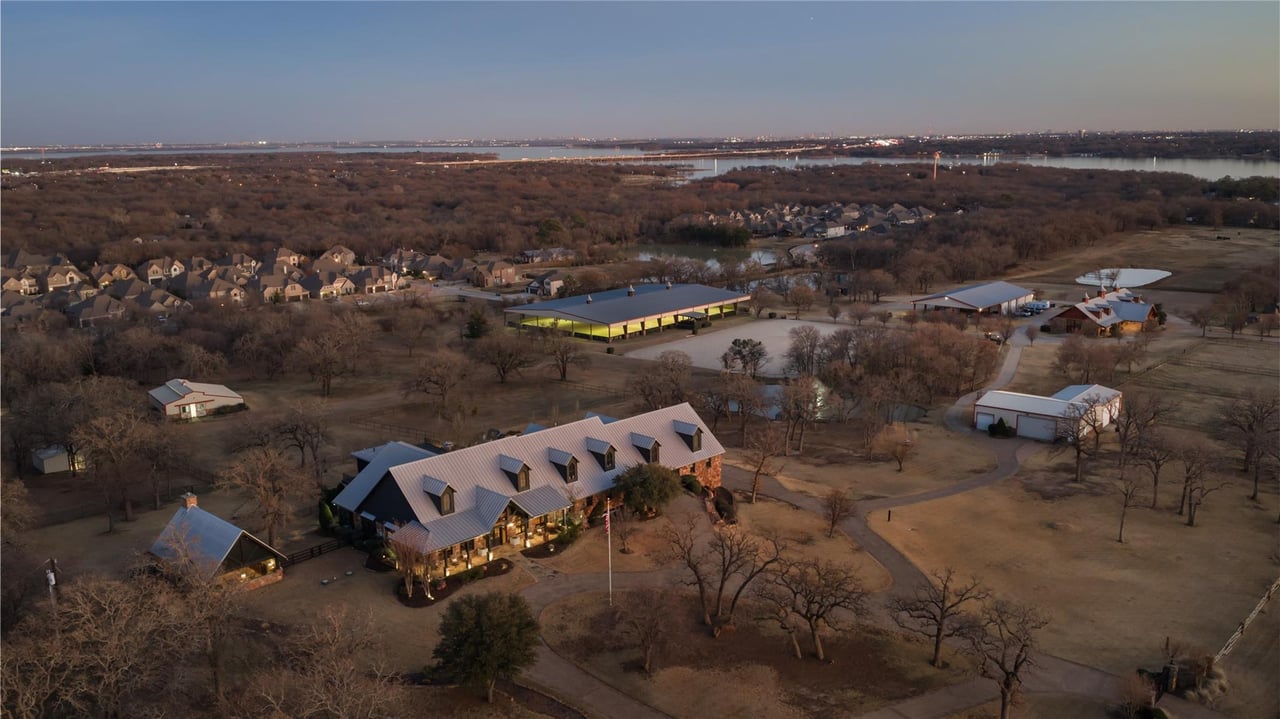
A first-time ranch buyer in Texas should understand four things before signing: agricultural valuation is earned over five of the preceding seven years and lost with three years of rollback tax, groundwater and surface water are governed by completely different legal regimes, septic on rural acreage is a permitted system with ongoing obligations, and the statutory seller's disclosure that protects residential buyers generally does not apply to raw land. Those four items decide most of what goes wrong in a first ranch purchase.
The market context: rural land in Northeast Texas ran a median of $8,960 per acre in the first quarter of 2026, up 0.98% year over year, on the lowest sales count since 2013 (Texas Real Estate Research Center, Texas Rural Land Markets, First Quarter 2026, published May 26, 2026). Fewer transactions, larger tracts, and a market that is moderating rather than running.
Working with a first-time ranch buyer in Texas is a different job from working with a residential buyer, and at The Agency Dallas the diligence list below is where that work starts.
How does agricultural valuation work, and can I keep it?
This is the item with the largest dollar consequence and the most common misunderstanding.
Texas 1-d-1 open-space appraisal values qualifying land on its agricultural productivity rather than its market value, which can cut the tax bill dramatically. To qualify, land must be currently devoted principally to agricultural use to the degree of intensity generally accepted in the area, and must have been devoted to a qualifying agricultural use in five of the preceding seven years (Texas Comptroller of Public Accounts, agricultural special appraisal guidance).
Two consequences a first-time buyer needs to hold onto:
- You inherit the history, not a permanent status. If the land carries ag valuation at closing, you must continue a qualifying use at the accepted intensity. Buying a working hay operation and letting it go fallow is how people lose it.
- Losing it is expensive and retroactive. A change of use triggers rollback tax for the previous three years — the difference between what was paid on agricultural value and what would have been paid at market value. The trigger is a physical change in use; reducing intensity does not trigger it, but ceasing agricultural activity does. HB 3833, effective June 15, 2021, shortened the rollback from five years to three.
Intensity standards are set county by county, and they are specific. Two examples from published North Texas guidelines:
- Collin County requires a minimum of two animal units maintained for 180 days for grazing, and recommends 6 to 10 acres for improved pasture or 8 to 12 for native pasture to support minimal animal units. Hay carries a 5-acre minimum; vineyard 3 acres; beekeeping qualifies from 5 to 20 acres with six hives on the first 5 acres plus one hive per additional 2.5 acres. One acre is carved out as homesite.
- Kaufman County requires 9 contiguous acres for cattle, horses, goats, sheep, hay, and most crops, with cattle needing three head supported on the first 9 acres plus one per additional 8 acres. Wildlife management carries a 12.5-acre minimum. The district requires at least three current documents as evidence of use.
Guidelines for Denton, Rockwall and Hunt counties were not available from their appraisal districts at the time of writing, and we will not publish numbers for them without the source. Always pull the guidelines for the specific county before you underwrite the tax line.
What about wildlife management valuation?
It is a genuine alternative for a buyer who does not want livestock, with one hard precondition: the land must already have qualified and been appraised as 1-d-1 open-space agricultural or timber land in the year before conversion. You cannot convert raw, unqualified land straight to wildlife management.
Once converted, the owner must perform at least three of seven approved practices: habitat control, erosion control, predator control, supplemental water, supplemental food, providing shelter, and census counts. A wildlife management plan is filed on Texas Parks and Wildlife form PWD-885-W7000, with an annual report thereafter.
Who owns the water?
Texas treats groundwater and surface water as fundamentally different property.
Groundwater follows the rule of capture: the landowner owns the groundwater beneath the tract as part of the fee simple estate and may generally pump it. No state agency regulates groundwater production. Instead it is managed locally by Groundwater Conservation Districts, which the state designates as its preferred method of management and which may modify the rule of capture through permitting of non-exempt wells and spacing requirements (Texas Commission on Environmental Quality).
Surface water is owned by the State of Texas. Diverting or using it generally requires a water right permit from the TCEQ. A creek running through the property does not come with the right to impound or divert it.
For a first-time buyer, the practical questions are: is there a district, what does it require, is there an existing well and what is its production and depth, and does anything on the tract depend on surface water that is not actually yours to use.
What do I need to know about septic?
Rural property outside a sewer system needs an On-Site Sewage Facility, regulated by the TCEQ under 30 Texas Administrative Code Chapter 285. Permits for installation and major repair are typically issued by the county acting as authorized agent, not by TCEQ directly.
Aerobic systems — common where soils will not perc — require a maintenance contract with a licensed provider and periodic inspection. That is a recurring cost and a recurring obligation, and an expired contract is a real problem at resale.
Two commonly repeated claims about Texas septic — a ten-acre exemption for single-family use and a fixed inspection interval — we could not verify against a TCEQ primary source and are not stating here. Confirm both with the county authorized agent for the specific property.
What will the seller actually have to tell me?
Less than you expect, and this is the item that catches first-time buyers hardest.
Texas Property Code §5.008 requires a written Seller's Disclosure of Property Condition covering FEMA 100-year and 500-year floodplain location, flooding in the past five years, location in a reservoir flood pool, prior flood-damage repairs, and flood insurance proceeds. It includes a checkbox for unplatted easements.
But §5.008 applies to residential real property with not more than one dwelling unit. Raw or unimproved acreage is generally outside it. On a bare-land purchase you may receive no statutory disclosure at all, which shifts the entire burden onto the survey, the title commitment's Schedule B, and your own inspection.
The diligence list
- A new survey, not the seller's old one. Acreage, frontage, encroachments, and easement locations.
- Title commitment Schedule B, read line by line. Access easements, mineral reservations, restrictions, pipeline easements.
- Legal access. Confirm frontage on a public road or a recorded, adequate easement. Landlocked land is a financing problem as well as a use problem.
- The appraisal district record, confirming whether ag valuation is in place, under what use, and what the county's intensity standard requires.
- Groundwater district rules, and well records if a well exists.
- Floodplain determination run against the new survey.
- Septic permit and, if aerobic, the current maintenance contract.
- Mineral status report, so you know whether the minerals were severed and whether anything is active.
- Fencing condition and boundaries, which frequently do not match the survey.
- Utility availability and cost to extend — often the largest unbudgeted number in a first ranch purchase.
FAQ
How long does it take to qualify land for agricultural valuation in Texas?
The land must have been devoted to a qualifying agricultural use in five of the preceding seven years, at the degree of intensity generally accepted in the area. In practice that means building a documented five-year history and applying in year six. If the land already carries ag valuation, you inherit that status by continuing a qualifying use.
What is rollback tax and when does it hit?
When land receiving agricultural appraisal undergoes a physical change of use, rollback tax becomes due for the previous three years — the difference between taxes paid on agricultural value and taxes that would have been due at market value. HB 3833, effective June 15, 2021, reduced the lookback from five years to three.
How many acres do I need for an ag exemption in North Texas?
It depends on the county and the use, and there is no statewide number. Collin County requires two animal units for 180 days for grazing and recommends 6 to 10 acres of improved pasture to support them, with a 5-acre minimum for hay. Kaufman County requires 9 contiguous acres for most livestock and crop uses. Pull the specific county's published guidelines before assuming.
Do I own the water under my Texas ranch?
Groundwater, generally yes — Texas follows the rule of capture, and groundwater is part of the fee simple estate. But a local Groundwater Conservation District may regulate non-exempt wells and spacing. Surface water is different: it is owned by the State of Texas, and diverting or impounding it usually requires a permit from the TCEQ.
Will the seller give me a disclosure on raw land?
Often not. Texas Property Code §5.008 requires the seller's disclosure for residential property with not more than one dwelling unit. Unimproved acreage generally falls outside it, which means the survey, the title commitment, and your own inspection carry the full weight.
What is the most expensive surprise for a first-time ranch buyer?
Usually one of three: rollback tax triggered by a change of use, the cost of extending utilities to a building site, or discovering that access depends on an easement that is inadequate or unrecorded. All three are findable before closing.