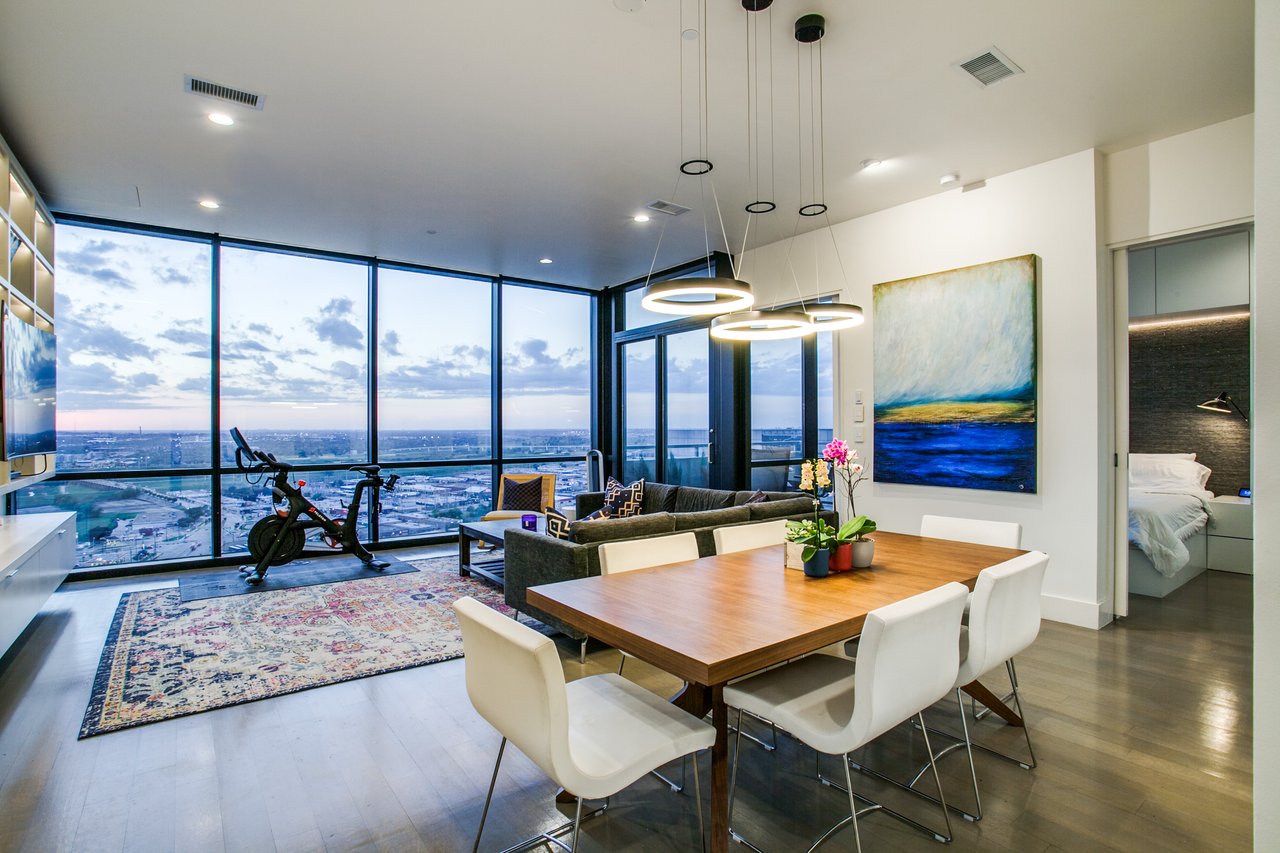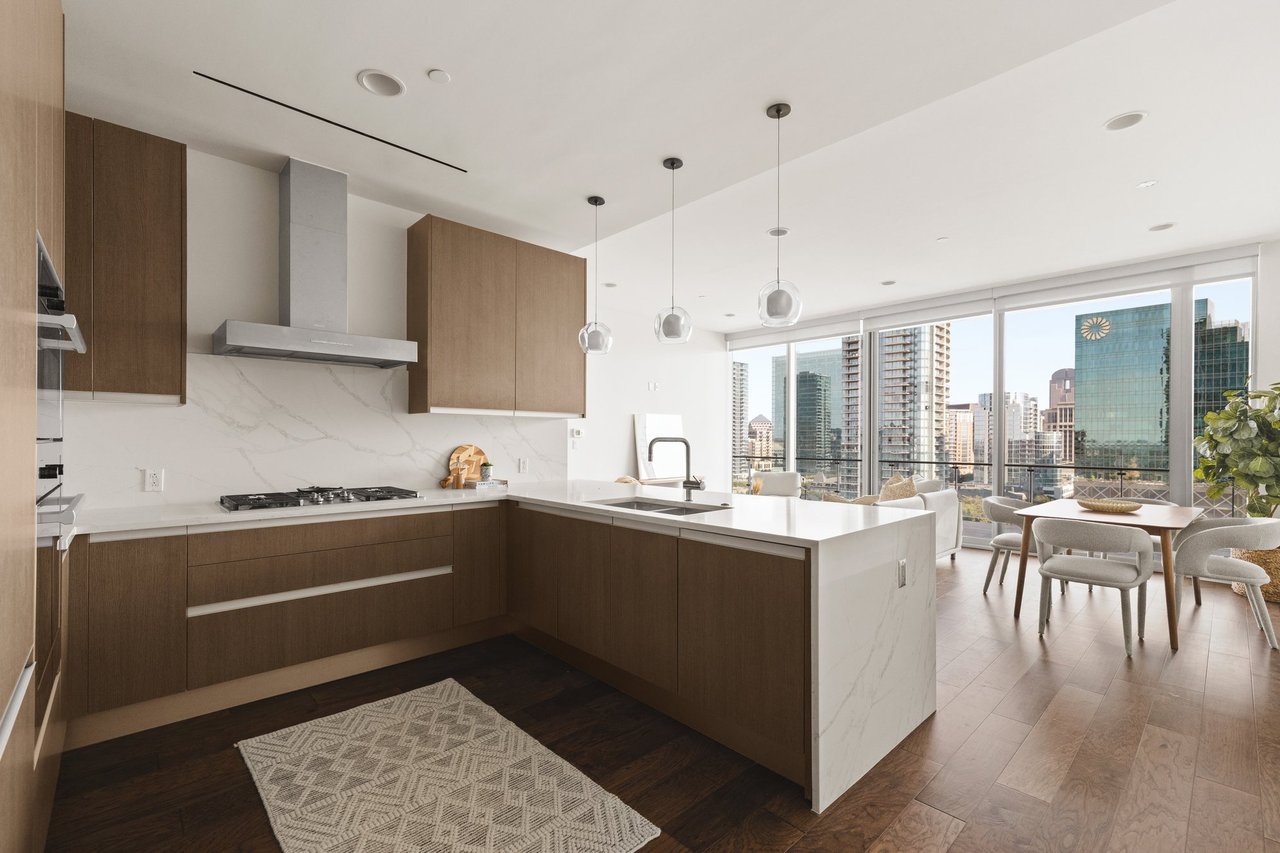
The never-occupied residences at Bleu Ciel are units the original developer held from the time the tower was completed in 2018 and never sold or rented. In 2026, new ownership acquired a group of them and brought them to market. They are new in condition inside an eight-year-old building — which, for a buyer, is an unusual and mostly favorable combination.
Every time I explain this on a tour, someone asks a version of the same question: if the building opened in 2018, how is anything in it new? Fair question. Here is the actual answer, and then the part that matters — what that history means for you as a buyer, including the parts that cut the other way.
What actually happened
Developers routinely retain a block of units at completion. Sometimes it is for financing reasons, sometimes to control the pace of sales so the early buyers' values hold, sometimes simply because the developer wants to hold an appreciating asset. Those units come out of inventory and sit.
At Bleu Ciel, a group of residences stayed with the original developer from 2018 forward. They were finished, they were maintained, and they were never occupied. In 2026 new ownership bought that group and is releasing it. Residences 1507 and 1805 — each $1,095,000 — are two of them, and Penthouse 2701 is coming to a private list. The residences section has current photography of both.
Why this is genuinely good for a buyer
Normally you choose between two imperfect options. New construction gives you a pristine unit in a building with no track record — no assessment history, an association still controlled by the developer, amenities that have never been stress-tested, and reserves that have never been tested by a real repair. Resale gives you a proven building and someone else's eight-year-old kitchen.
These residences give you both halves of the good version:
- A finished, never-lived-in interior. Miele appliances that have not been used. Porcelanosa cabinetry with no wear. No prior owner's renovation decisions to undo.
- A building with eight years of operating history. The association is established. There is an actual assessment history to read. The amenity level has been running since 2018, which means the things that break have had time to break. Reserve behavior is visible in the record instead of projected on a spreadsheet.
That second point is the one I would emphasize if you only take one thing from this. When you buy into a brand-new tower you are underwriting a forecast. Here you are underwriting a record. Pull the resale certificate and you can see how this association has actually behaved — what it has spent, what it has reserved, whether it has ever assessed. Under Texas Property Code §82.157 the association has to give you the operating budget, the balance sheet, reserve amounts and approved capital expenditures for the next twelve months, within ten days of a written request. On an eight-year-old building, those documents are informative rather than theoretical.
Our team wrote the full mechanics up in what's actually different about buying a condo in Texas, and the six-day cancellation window in there is worth knowing before you sign anything.
Where it cuts the other way
I would rather you hear these from me than discover them later.
- The finishes are 2018 finishes. They are unused, not current. If you want a 2026 kitchen you will be renovating a kitchen that has never been cooked in, which some buyers find genuinely difficult.
- Warranties are largely gone. A new-construction buyer gets a builder's warranty. Eight years on, most of that has expired. You are buying a condition, not a warranty — which makes an independent inspection worth more here, not less, despite the unit being untouched.
- Systems age on the building's clock, not the unit's. The HVAC serving your never-used residence is the same age as the building. Ask what has been serviced and what is scheduled.
- Single-entity ownership can affect financing. This is the technical one and it matters. Fannie Mae will not treat a project as eligible if a single entity owns more than 20% of the units in a 21-plus-unit project. When a developer has held a block for years, that threshold is a live question. Your lender will check it, and you should ask early rather than at underwriting. I cover the whole lender-review question in what a condo lender will ask about the building.
None of those are dealbreakers. They are the diligence list, and any of them is answerable in a week.
How I would evaluate one of these
- Inspect anyway. Never occupied is not the same as never aged. Eight years of a unit sitting in a sealed envelope produces its own issues — seals, finishes, appliances that have never run.
- Read the assessment history, not just the current dues. Eight years is enough record to show a pattern.
- Ask your lender about project eligibility on day one. Before the option period, not during.
- Compare against the resale units in the same building, not just against new construction elsewhere. That comparison is the one that tells you what the never-occupied condition is actually worth.
- Look at the reserve against the amenity level. A resort-scale amenity floor is a resort-scale replacement obligation.
What this means at $1,095,000
Where that price sits in the Dallas market is its own conversation, and I laid out the numbers in what $1,095,000 buys at Bleu Ciel right now — including the part I would not lead with if I were only selling, which is that the Dallas luxury condo market overall saw closed sales fall 22% in the first half of 2026 against the first half of 2025. The exception in that data is the $1M–$2M band, where closed sales were up 31%, and these two sit at its lower edge.
Tours of 1507 and 1805 are by appointment. Call or text me at 214.325.9827, or use the tour request on the Bleu Ciel page.
Frequently asked questions
How can a 2018 building have never-occupied condos?
The original developer retained a group of residences at completion and never sold or rented them. New ownership acquired that group in 2026 and is bringing it to market. The units are new in condition; the building has been operating since 2018.
Are these new construction or resale?
Legally they are resales — you will use the TREC Residential Condominium Contract (Resale), TREC No. 30-17, and you get a resale certificate from the association. In condition they are new. That combination is the point.
Do these residences come with a builder's warranty?
Generally no. Eight years past completion, most builder warranty coverage has expired. Buy on inspected condition rather than on warranty, and inspect even though the unit has never been lived in.
Is it harder to finance a unit in a building where one owner held a lot of units?
It can be. Fannie Mae treats a project as ineligible if a single entity owns more than 20% of units in a project of 21 or more units. Ask your lender to run project eligibility before your option period rather than during underwriting.
Should I still get an inspection on a never-occupied condo?
Yes. Unused is not the same as unaged — seals, finishes and appliances all age whether or not anyone uses them, and building systems serving the unit are as old as the building.
What is still available?
Residences 1507 and 1805 at $1,095,000 each, and Penthouse 2701, which goes to a private list before public release. Current availability is on the Bleu Ciel page.
Sources: The Agency Dallas Bleu Ciel building page (ownership history, residence detail and pricing); Texas Property Code §82.157 (resale certificate contents and delivery deadline); Fannie Mae Selling Guide (single-entity ownership concentration limit); published mid-year 2026 Dallas luxury high-rise market report covering twenty premier towers (segment sales data).