Talk to a Land & Ranch specialist about your search
Buying, selling or just pricing land? Send the county, acreage and budget or estimated value, and a specialist from The Agency Dallas Land & Ranch Division will follow up within one business day.
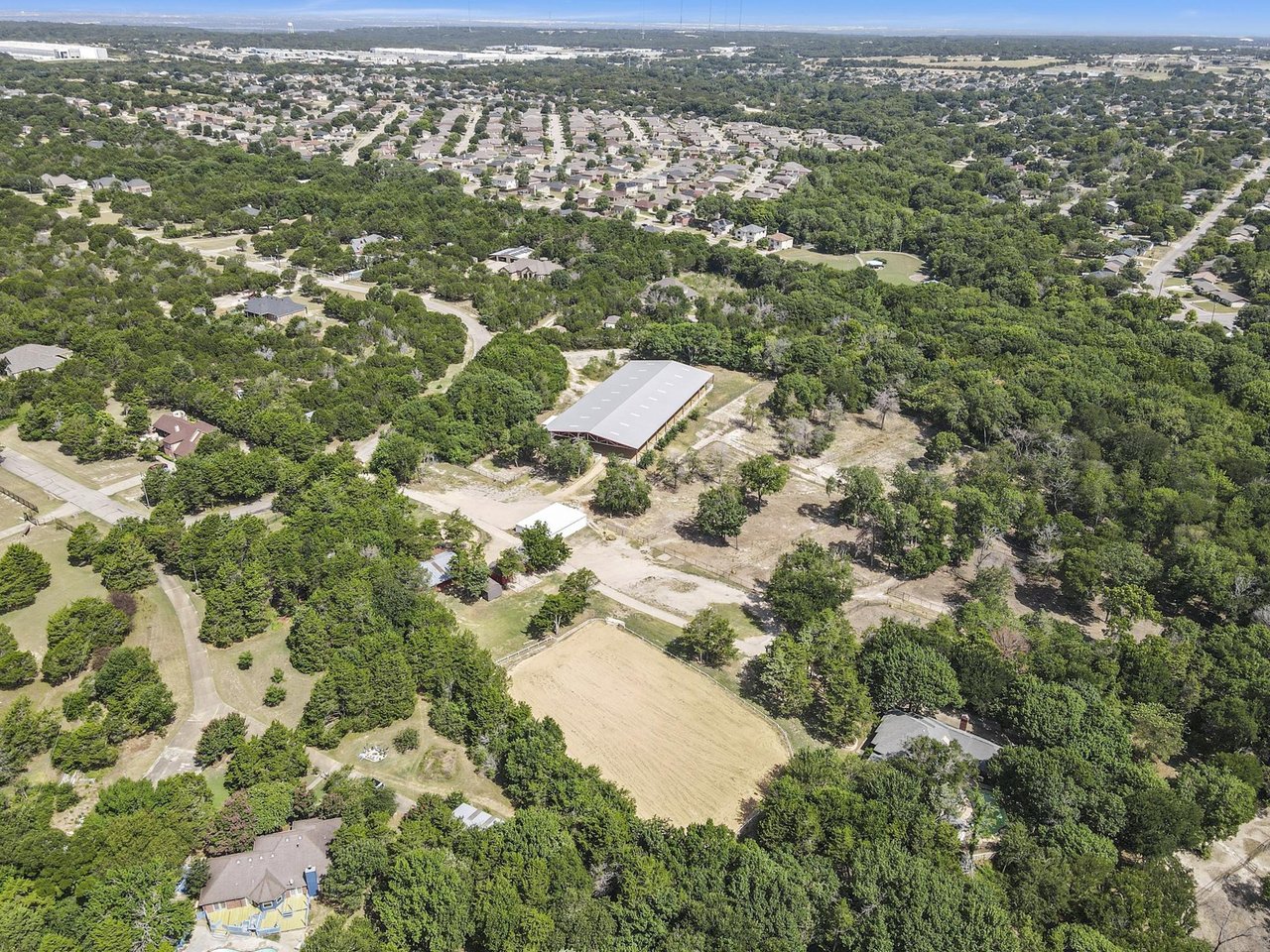
Choose the broker who can answer four questions about your specific tract without looking anything up: water, minerals, ag valuation, and legal access. A Texas sales agent license requires 180 hours of qualifying education across six courses, and not one of them covers land. Ask about the REALTORS® Land Institute and its Accredited Land Consultant designation, ask for tract-specific answers, and hire whoever gives you numbers instead of adjectives.
A Texas sales agent license requires 180 hours of TREC-approved qualifying education, delivered as six 30-hour courses: Principles of Real Estate I, Principles of Real Estate II, Law of Agency, Law of Contracts, Promulgated Contract Forms, and Real Estate Finance. After that comes a 125-question state exam, then 98 hours of Sales Agent Apprentice Education inside the first license term.
That is a real education, and it is start to finish an education in improved residential and general brokerage practice. Nothing in the required core addresses surface water rights under Texas Water Code §11.142, groundwater conservation district permitting, a severed mineral estate, 1-d-1 open-space valuation under Tax Code §23.51, rollback tax under §23.55, county subdivision authority under Local Government Code Ch. 232, or on-site sewage facilities under Health & Safety Code Ch. 366.
A license is the floor. On a land transaction it is not the qualification.
The REALTORS® Land Institute was founded in 1944 as the Farm & Land Institute and is an affiliate organization of the National Association of REALTORS®. It is the membership body specifically for practitioners who work in land: farms and ranches, recreational tracts, raw land, transitional land, and land assemblage. Its designation is the Accredited Land Consultant, or ALC. RLI's published requirements are substantial:
Here is the honest version. An ALC is a strong signal because somebody outside the broker's own marketing checked the work. It is not a guarantee of judgment, and its absence is not disqualifying. There are capable land brokers in Texas who never pursued it and who close difficult tracts every year. What it is genuinely good for is this: if you are choosing between strangers, it is one of the very few objective filters available to you.
Credential | Who issues it | What it requires | What it tells you |
|---|---|---|---|
Sales agent license | Texas Real Estate Commission | 180 hours, six courses, 125-question exam | The person may lawfully represent you. Nothing about land. |
Broker license | Texas Real Estate Commission | Additional education and years of active licensed experience, set by TREC | Supervisory responsibility and more time in the business. Still nothing about land. |
REALTOR® membership | National Association of REALTORS® | Local association membership, bound by the Code of Ethics | An ethics complaint process exists. A prerequisite for the ALC. |
ALC | REALTORS® Land Institute | 104 hours, exam, two years' experience, $20M land volume over five years, peer review | Verified land education and verified land production. |
Not because they are careless. Because the two jobs share a license and almost nothing else.
A house | A tract of land | |
|---|---|---|
What is being sold | A structure on a lot | Surface, water, minerals, access, and a tax classification |
How value is set | Comps inside a subdivision, adjusted per square foot | Price per acre, adjusted for access, water, topography, soils, and tract size, often with no true comp nearby |
The contract | One to Four Family Residential Contract | Farm and Ranch Contract, TREC No. 25-16 |
Core diligence | Inspection, appraisal, survey | Survey, title commitment and reserved minerals, easements and legal access, floodplain, soils, septic feasibility, water supply, ag valuation status |
Tax exposure | Homestead exemption | 1-d-1 open-space valuation, and rollback under §23.55, with a three-year lookback, no interest since HB 3833 |
Financing | Conventional, FHA, VA | Land loans, Farm Credit lenders, seller financing, larger down payments |
Marketing window | Weeks | Months, sometimes longer |
A residential agent who takes a land listing does not know what they do not know. The failure is almost never a bad negotiation. It is a missed mineral reservation, an access easement nobody pulled, or an ag valuation that lapsed after closing because no one told the buyer to file a new application with the appraisal district. It is the most commonly missed item at a rural closing in Texas, covered in full on the ag exemption page.
Four subjects. Ask about all four in the first conversation and listen to how fast the answers come.
Water. Under Texas Water Code §11.142, a landowner may build a dam or reservoir of not more than 200 acre-feet of normal storage for domestic and livestock use without a permit, and that exemption does not apply to a commercial operation. Surface water in a watercourse is state water; diverting it for irrigation or commercial use requires a water right from the TCEQ. Groundwater follows the rule of capture, modified by groundwater conservation district regulation, and in Edwards Aquifer Authority v. Day, decided February 24, 2012, the Texas Supreme Court held that a landowner has a vested ownership interest in groundwater in place. A land broker should be able to name the district your tract sits in, or tell you plainly that it sits in none. More on the water rights page.
Minerals. Texas recognizes a severed mineral estate, and the mineral estate is the dominant estate. It carries an implied right of reasonable surface use. Minerals do not convey unless the deed conveys them. Your broker should ask, unprompted, what percentage of the minerals conveys, whether the seller owns any at all, and whether a lease or surface use agreement is in place. The title commitment shows the reservations in prior deeds. See the mineral rights page.
Ag valuation. 1-d-1 open-space appraisal comes from Texas Constitution Art. VIII §1-d-1 and Tax Code §23.51 et seq. The application window is January 1 through April 30, filed with the county appraisal district on Comptroller Form 50-129, and a change in ownership requires the new owner to file a new application. The ag history runs with the land, not with the seller. Degree-of-intensity and acreage standards are set county by county. There is no statewide minimum, so any broker who quotes you one is guessing.
Access. Legal access and physical access are different things. A dirt road you can drive is not an easement. Ask whether the tract fronts a county-maintained road, whether access runs by recorded easement, and what that easement permits: width, use, and maintenance obligation. A landlocked tract with a handshake road is a title problem, not a driveway problem.
Before hiring a land broker in Texas, ask how many rural tracts they have closed in your county, how they verify access, water and minerals, which contract they use, how they market land, and how they are paid. A land broker's value is in the due diligence and the local sales knowledge, so the answers should be specific. Each question below is followed by what a good answer sounds like.
Before the first meeting, confirm the license is active and check for disciplinary history on the TREC license holder search.
That last one is the useful one. The answer tells you whether you are talking to a practitioner or a brochure.
A house sells on interior photography and a floor plan. A tract sells on geography, and the buyer needs to understand the ground before they will drive to it.
If a broker's marketing plan for 40 acres is the plan they would run on a three-bedroom in Frisco, that is your answer.
Commission is negotiable in Texas, on every transaction, always. Land commonly carries a higher rate than residential, and there is a defensible reason: the marketing spend is real, the window is measured in months, and the diligence work is heavier. What matters is not the number but whether the broker will explain what the number buys.
On the buy side, put representation in writing. The questions about minerals and access are adversarial questions, and you want someone whose duty runs to you when they get asked. Texas does not use the phrase "dual agency." When one brokerage represents both sides, Texas law calls it intermediary status, and it requires written consent from both parties. Ask early whether the firm intends to act as an intermediary and what that means for the advice you receive.
None of this requires you to hire us. If you hire a different firm and hire them well, the transaction goes better, and that is the point of this page. For the buy side start to finish, see buying land in Texas and the due diligence checklist. For the other side of the table, selling Texas land. If you are still deciding where to look, the North Texas land hub breaks the region down county by county.
Ask us the same questions you would ask anyone else. Call (469) 839-6020 or contact the Land & Ranch team.
Legally, yes. Practically, no. The 180 hours of qualifying education required for a Texas sales agent license cover principles, agency, contracts, promulgated forms, and finance. None of the six required courses addresses water rights, mineral estates, ag valuation, rollback tax, county platting, or septic feasibility. The license permits the representation. It does not supply the knowledge.
No. The Accredited Land Consultant designation is voluntary, issued by the REALTORS® Land Institute, and no state law conditions land brokerage on holding it. It is a useful filter because its requirements are checked by peer review rather than self-reported: 104 hours of coursework, an exam, two years of field experience, and $20 million in documented land volume over five years.
Commission is negotiable on every Texas transaction and is set by agreement between the seller and the broker, not by law, custom, or any association. Land rates commonly run above residential rates because the marketing period is longer and the marketing spend is higher. Ask what the rate buys: aerial work, mapping, survey coordination, and paid placement on the land networks all cost money.
We think so. Land questions are adversarial by nature: what conveys, what is reserved, whether access is recorded, whether the ag valuation survives closing. A written buyer representation agreement establishes that the person answering those questions owes their duty to you. Without one, the agent you are talking to may owe theirs to the seller.
In practice the terms overlap and neither is a regulated title. "Ranch broker" usually signals larger tracts, operating agricultural or recreational property, and improvements like barns, pens, and headquarters. "Land broker" covers raw and transitional tracts as well. Judge the person by the transactions they have closed and the counties they closed them in, not by the word on the sign.
Use the license holder lookup on trec.texas.gov. It shows license status, expiration date, the sponsoring broker for a sales agent, and any disciplinary history. It takes about a minute and almost nobody does it. Do it before the first meeting, not after.
Say so out loud and ask them to say so out loud. Land practice is genuinely county-specific: appraisal district standards, groundwater district rules, subdivision and platting requirements, and septic permitting all change at the county line. A broker who works two counties over, admits it, and brings in local help is more useful than one who bluffs.
Sources and method
Texas Real Estate Commission: sales agent qualifying education and license holder lookup, trec.texas.gov · REALTORS® Land Institute: ALC designation requirements, rliland.com · Texas Constitution Art. VIII §1-d-1 and Texas Tax Code §23.51 et seq., §23.55 · Texas Water Code §11.142 · Edwards Aquifer Authority v. Day (Tex. 2012), decided February 24, 2012 · TREC No. 25-16 Farm and Ranch Contract, 22 TAC §537.32 · USDA NRCS Web Soil Survey · CoStar Group, Land.com network. Figures verified August 2026.
County appraisal districts set their own degree-of-intensity and acreage standards. Confirm current requirements with the appraisal district for the county your land sits in before you rely on anything here. This is general information, not tax or legal advice.
If you want a second read on a tract before you commit (the survey, the title commitment, the mineral reservations, the ag status), send it over. We will tell you what we see, including when the answer is that it is not the right land. Start a conversation with The Agency Dallas, or go back to Texas Land & Ranch.
Last reviewed September 2026 by Damon Williamson, Broker, The Agency Dallas.
The Agency Dallas is independently owned and operated by Damon & Megan Williamson.
Damon Williamson, Broker-Owner · Licensed Real Estate Agent, State of Texas.
Dallas, Dallas County, Texas 75225. Equal Housing Opportunity.
Texas Real Estate Commission Information About Brokerage Services and Consumer Protection Notice are available at trec.texas.gov.
This is not intended as a solicitation of property currently listed for sale.
Buying, selling or just pricing land? Send the county, acreage and budget or estimated value, and a specialist from The Agency Dallas Land & Ranch Division will follow up within one business day.

8111 Preston Rd, Ste 725 Dallas, TX 75225
8111 Preston Rd, Ste 725 Dallas, TX 75225