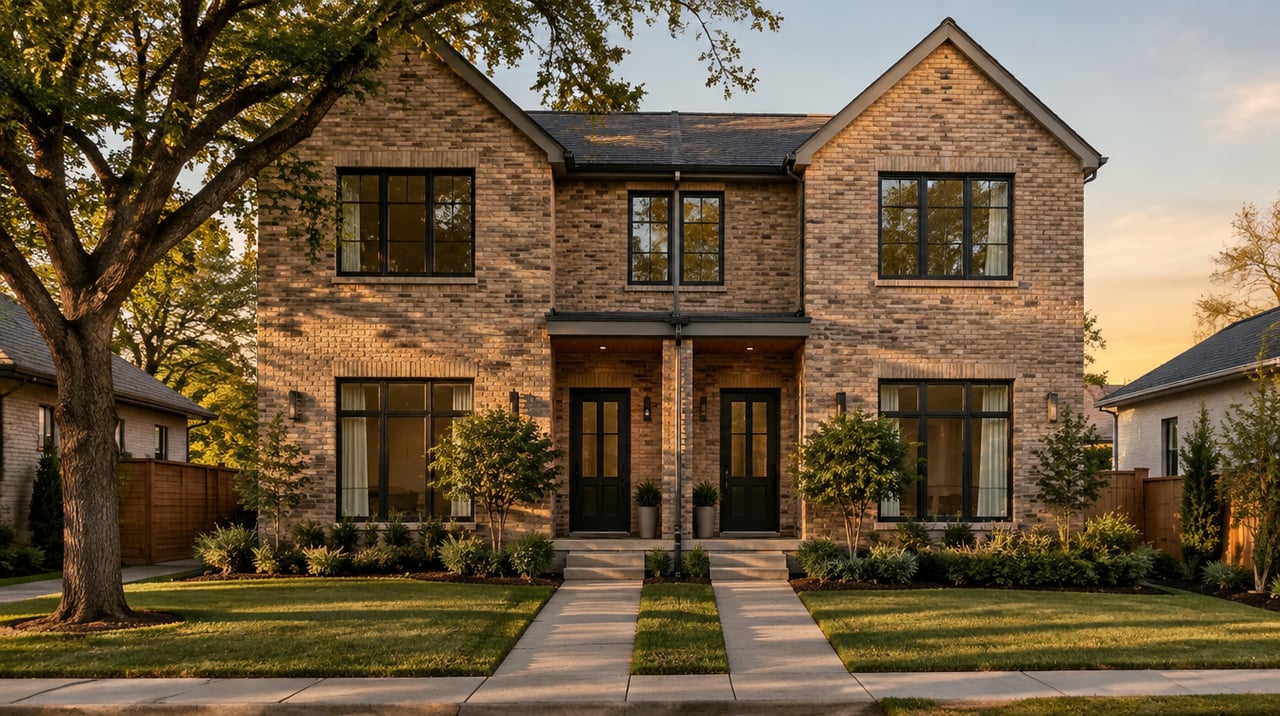
For most Dallas-Fort Worth rental properties, a useful rent-to-price ratio is whatever clears your required return after property taxes, insurance, vacancy, and repairs, not a fixed percentage. The old 1% rule (monthly rent equal to 1% of the purchase price) is a screening shortcut, and in Dallas it rarely survives contact with real prices. The Agency Dallas uses the ratio to decide what deserves a full underwriting, then relies on net numbers to decide what to buy.
What is the rent-to-price ratio, and what is the 1% rule?
The rent-to-price ratio is monthly rent divided by purchase price. A $300,000 home renting for $2,400 a month has a ratio of 0.8%. The 1% rule says a rental should rent for at least 1% of its price each month, and the 2% rule asks for double that. Both are rough screens, designed to be applied in seconds to a long list of properties.
The related gross rent multiplier (GRM) flips the arithmetic: price divided by annual rent. The same $300,000 home at $28,800 of annual rent has a GRM of about 10.4. A lower GRM means more rent per dollar of price. Neither measure says anything about expenses, which is where Texas rentals tend to surprise their owners.
What does the 1% rule look like against Dallas rents?
Zillow's Observed Rent Index put typical Dallas metro asking rent at $1,673 in June 2026, unchanged from a year earlier. Applying the 1% rule to that figure is simple arithmetic: a property would need to cost about $167,300 or less to meet it. Homes at that price are scarce in much of the metro, and the ones that exist often come with condition, location, or tenant-quality tradeoffs that offset the apparent yield.
This is why we treat 1% as a screen rather than a standard. Our own guide to buying rental homes in Texas and what the 2026 numbers say covers the same rent data and the leasing concessions investors should expect in this market. In practice, many DFW single-family rentals land below 1%, and an investor's job is to understand what else the property offers: appreciation potential, a strong tenant pool, low vacancy, or a favorable purchase price on a property that needs work.
What rent-to-price ratio should I look for in a Dallas investment property?
Start from the return you require and work backward. Three common targets, from least to most demanding:
- Screening ratio of about 0.7% to 0.8%. Some investors set a range like this to decide which Dallas properties get a closer look, given local prices. Treat it as a personal threshold, not a market standard.
- 1% or higher. Possible in lower-priced submarkets and some distressed purchases, but expect higher repair budgets, higher vacancy, or tougher tenant screening.
- Net yield that meets your goal. After expenses, calculate the cap rate or cash-on-cash return. If a property passes your screen but fails the net test, the ratio was misleading.
The point is not to find a magic number. It is to use a fast filter and then verify with real operating costs, which is covered in the next section.
Why does a good ratio still produce a bad deal?
Because the ratio ignores everything that happens between rent collected and money kept. In Texas, three costs deserve special attention.
Property taxes
Texas has no state income tax, and property taxes carry much of the load. Rates vary by city, county, school district, and special districts, so two houses with the same rent and price can have very different net income. Our guide to how property taxes and insurance affect rental returns in Texas explains how to estimate them from the actual tax bill rather than a rule of thumb.
Insurance
North Texas hail can move landlord insurance premiums substantially, and premiums vary widely by roof age and carrier. Get a quote before you make an offer, not after.
Vacancy, concessions, and repairs
One vacant month equals roughly 8% of annual rent. If a property sits empty for a month and then offers a free month to land a tenant, the effective rent drops further. Our look at short-term versus long-term rentals in Dallas shows how different strategies change the vacancy and cost picture.
How do you turn a rent-to-price ratio into a real return?
Use the ratio as step one in a short process:
- Screen with the ratio. Divide expected monthly rent by price and drop anything below your personal threshold.
- Confirm the rent. Check comparable current rentals and any concessions, not just the asking price on one listing.
- List all operating costs. Property taxes, insurance, repairs, management if you will use it, HOA dues, and vacancy.
- Compute net operating income and cap rate. Compare the result with typical cap rates for DFW rental properties.
- Stress test it. Add a vacancy month, a roof or HVAC repair, and a tax reassessment, and see whether the property still works.
The full walkthrough is in our guide to analyzing a Dallas rental property before making an offer. If you are also considering below-market opportunities, see where to find distressed or off-market investment deals in DFW, since a discounted purchase changes the ratio dramatically.
How does The Agency Dallas use the rent-to-price ratio?
The Agency Dallas uses the rent-to-price ratio for what it does well: ranking a long list quickly. We then help investors verify rent with current comparables, estimate taxes and insurance from actual figures, and decide whether a property fits their buy box. When investors want a longer relationship around a portfolio, our article on finding reputable investment property advisors in Dallas outlines what a transparent advisory process looks like.
Related reading
This week we also published guides on finding distressed and off-market investment deals in DFW, which home builders have the best reputation in Dallas-Fort Worth, and the best new home communities in Celina, Prosper, and Frisco.
Frequently asked questions
Does the 1% rule work in Dallas?
It works as a quick screen, but few Dallas properties meet it at current prices. With typical metro rent at $1,673 in June 2026 (Zillow), a home would need to cost about $167,300 to hit 1%. Most investors use a lower screening threshold and then test the property on net income, not gross rent.
What is a good gross rent multiplier?
A gross rent multiplier is price divided by annual rent, and lower numbers mean more rent per dollar of price. There is no universal good number, because the multiplier ignores expenses. Compare multipliers only among similar properties in the same area, then verify any candidate with net operating income and cap rate.
Is rent-to-price ratio the same as cap rate?
No. The rent-to-price ratio uses gross rent and ignores expenses, while the cap rate divides net operating income by price. A property with an attractive ratio can have a weak cap rate if taxes, insurance, or repairs are high. Use the ratio to screen and the cap rate to decide.
How much should I budget for vacancy?
One vacant month is about 8% of a year's rent, so many investors budget somewhere in that range, adjusted for property type, location, and tenant quality. Add expected concessions to the estimate. We suggest reviewing actual local rental activity before choosing a figure, instead of relying on a national average.
Should I rely on Zillow rent estimates?
Use them as a starting point. Rent indexes describe typical asking rents across a metro, not the specific property you are considering. Confirm with recent comparable rentals nearby, note any concessions being offered, and adjust for condition, school zone, and amenities before you trust any single estimate.