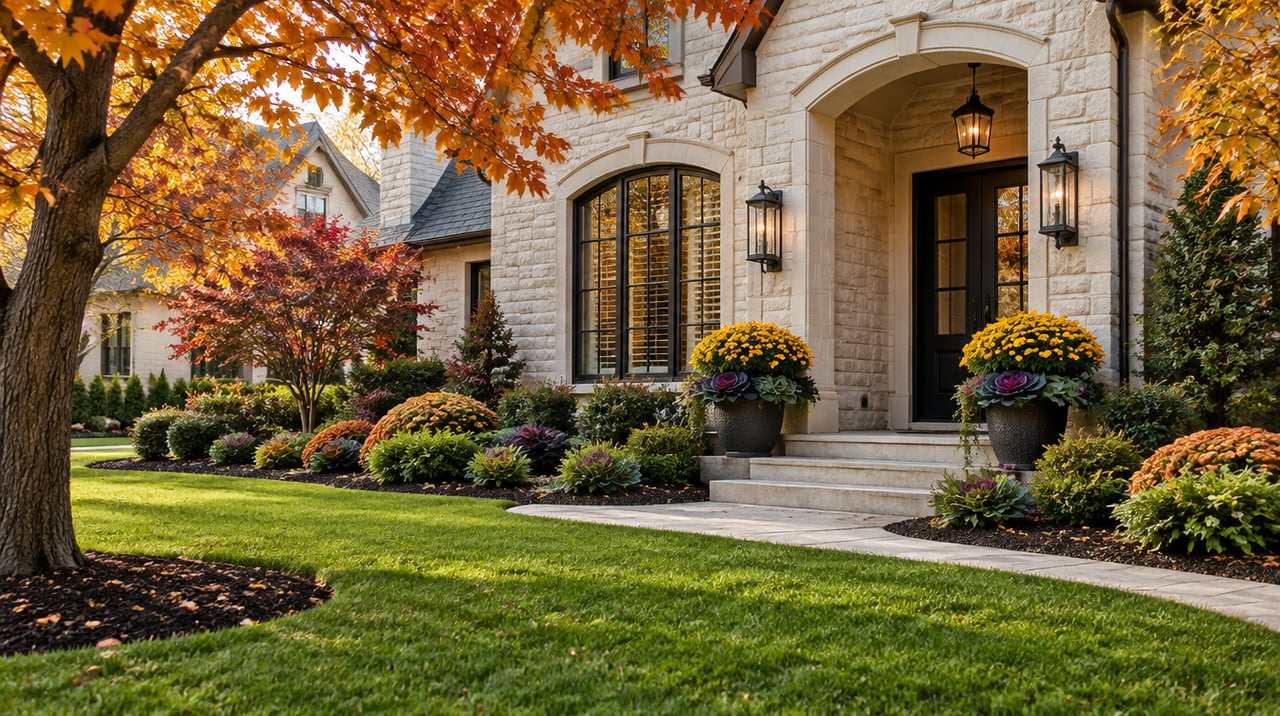
To get your yard ready to sell this fall in North Texas, focus on four things: clear leaves and debris every week, refresh beds with mulch and cool-season color, tune your irrigation within local watering rules, and make a deliberate choice about overseeding. Clean, edged, and green beats elaborate. Most of the value comes from basic maintenance done consistently through the listing period.
That is not just our opinion. In the National Association of Realtors and National Association of Landscape Professionals 2023 Remodeling Impact Report: Outdoor Features, released March 17, 2023, 92% of Realtors said they suggest sellers improve curb appeal before listing. The same report estimated that a standard lawn care service (about $415 nationally) could recover roughly 217% of its cost at sale, and that landscape maintenance (about $4,800) could recover about 104%. Those are national estimates and local results vary, but the direction is clear: routine yard care is one of the few pre-sale projects that tends to pay for itself.
Below is how our agents at The Agency Dallas think about getting a yard ready to sell this fall, step by step.
What should I do first to get my yard ready to sell?
Start with a walk around the property from the street, the way a buyer arrives. Then work from the curb inward. Buyers form an impression in the first few seconds, both in person and in the lead photo online.
A practical first-week list:
- Remove everything that is not landscaping. Hoses, empty pots, kids' gear, faded flags, and trash bins should be out of sight.
- Mow, edge, and string-trim. Crisp edges along the driveway, walk, and beds make an average lawn look cared for.
- Prune and lift. Cut back dead perennial stalks, trim shrubs off windows and walkways, and raise low tree limbs so the facade and front door are visible.
- Pull weeds and refresh mulch. A fresh, even layer of dark mulch is one of the cheapest visual upgrades available.
- Clean hard surfaces. Pressure-wash the driveway, walk, and porch, and clear gutters if leaves are spilling over.
- Fix the small broken things. Loose pavers, a leaning mailbox, a burned-out porch light, or a sprinkler head spraying the sidewalk all read as deferred maintenance.
If the inside of the home needs attention too, our guide on what repairs or staging are worth doing before selling a Dallas home covers how to prioritize.
Should I overseed my lawn before listing in the fall?
Overseeding a dormant warm-season lawn with ryegrass can keep it green through winter, which helps photos and showings. It is a real commitment, though, and it is not right for every lawn.
When is the right time to overseed in North Texas?
Texas A&M AgriLife Extension's publication on overseeding warm-season turf (ESC-053, 2019) recommends overseeding when average daily soil temperatures are consistently dropping below 72 degrees Fahrenheit. If you cannot measure soil temperature, it suggests starting when bermudagrass has nearly stopped growing, about four to six weeks before the first frost. The National Weather Service Fort Worth office lists November 22 as the average first freeze date for Dallas/Fort Worth, which puts the typical window in October. By late October you are near the end of that window, so act quickly or plan around a dormant lawn instead.
What are the trade-offs of overseeding?
AgriLife notes a few considerations worth knowing:
- Seeding rate and prep matter. The publication cites high rates of 10 to 20 pounds per 1,000 square feet, with good seed-to-soil contact from low mowing, aeration, or verticutting.
- Spring transition can be difficult. Ryegrass competes with bermudagrass as it greens up. Perennial ryegrass in particular often needs chemical removal; annual ryegrass tends to fade out more naturally.
- Herbicide conflicts. A fall pre-emergent can prevent ryegrass from germinating.
- Water. New seed needs consistent moisture, which has to fit inside your city's watering schedule.
The AgriLife guidance is written around bermudagrass. If your lawn is St. Augustine or zoysia, talk to a local turf professional before overseeding. If you expect to be under contract within a few weeks, a well-edged, evenly dormant lawn with sharp beds often photographs perfectly well. Buyers in North Texas understand that warm-season grass goes tan in winter.
What fall color should I plant to help my home sell?
Fall is a strong planting season here. The Dallas County Master Gardeners Association, in a September 2025 article titled "Fall is for Planting," explains that plants set roots in warm soil during cool nights and establish before spring. For curb appeal, keep it simple and concentrated where buyers look: the front walk, the entry, and any beds visible in the main exterior photo.
Plants the Master Gardeners suggest for fall include:
- Cool-season annuals: snapdragons, sweet alyssum, ornamental cabbage, and kale. They recommend waiting until the weather has truly cooled before planting pansies.
- Perennials: hardy mums, asters, and sedums such as Autumn Joy.
A few principles our agents use when advising sellers:
- Mass one or two colors rather than scattering many.
- Use containers at the front door to add color without reworking beds.
- Choose plants that will still look good in four to six weeks, since that is roughly how long many listings stay active. NAR's 2025 Profile of Home Buyers and Sellers reported a median of four weeks on the market for recently sold homes.
How do I handle fall leaves while my home is on the market?
Leaves are the main fall maintenance task for listings, especially under mature oaks, pecans, and elms. Plan on clearing them at least weekly, and always the day before photos, open houses, or a heavy showing weekend.
Texas A&M AgriLife Today has described mowing leaves with a mulching mower as the simplest approach: shredded pieces fall between grass blades and return nutrients to the soil. That works well for light to moderate leaf fall on the lawn. For beds, walks, porches, and the pool, blow or rake them clear, and keep gutters and drains open so water moves away from the foundation during fall storms. If heavier weather is on your mind, our post on how to prepare your North Texas home for winter covers freeze prep.
How should I water my yard this fall under Dallas watering rules?
If you are in the City of Dallas, the city's Water Conservation Ordinance limits landscape watering to a maximum of twice a week on days assigned by address. According to Dallas Water Utilities materials and an August 2025 Dallas City News update:
- Sprinklers and automatic irrigation systems may not run between 10 a.m. and 6 p.m. from April 1 through October 31, on any day.
- Hand watering, soaker hoses, and drip irrigation are allowed at any time.
- Automatic systems must have rain and freeze sensors.
- Water should not run off into streets or storm drains.
Check the city's current schedule at savedallaswater.com before you set your controller, since rules can change. Suburban cities set their own schedules, so check with your city's water department if you are outside Dallas.
Before listing, run each irrigation zone and look for broken heads, overspray onto hardscape, and dry patches. Buyers and inspectors notice soggy spots and misaligned heads, and a sprinkler spraying the street during a showing is a poor first impression.
Which yard projects are worth the money before selling?
Based on the 2023 NAR and NALP report, the strongest returns come from maintenance rather than new construction. The report found that Realtors most often recommend landscape maintenance (74%), standard lawn care (53%), and tree care (44%) before a sale. Big projects like outdoor kitchens and pools were rarely recommended as pre-sale moves, even though owners who build them for their own use report high satisfaction. If you are thinking longer term, our post on what makes a great outdoor living space covers that side.
For sellers working with The Agency Dallas, the goal of getting a yard ready to sell this fall is to look well kept in person and in photos. Since the lead photo is usually the front of the house, the yard does a lot of work online. Our post on how to make your home stand out online explains how the exterior shot is chosen and timed. If you are still weighing timing, see whether to sell in the fall or wait for spring.
Frequently asked questions
How far ahead should I start yard prep before listing in the fall?
Start two to four weeks before your photo date. That gives time for pruning, mulching, and planting to settle in, and time to fix irrigation problems. If you plan to overseed, start earlier, since ryegrass needs time to germinate and fill in. Leaf cleanup and mowing then continue weekly for as long as the home is on the market.
Does a dormant brown lawn hurt my sale in winter?
Usually not much. Warm-season grasses like bermudagrass and St. Augustine go dormant in North Texas winters, and local buyers expect it. What hurts is a lawn that looks neglected: weeds, bare patches, ragged edges, and leaf piles. An evenly dormant lawn with crisp edges, fresh mulch, and some potted color at the entry reads as cared for.
Is it worth hiring a landscaper before selling?
Often, yes, for a one-time cleanup and then routine maintenance during the listing. The 2023 NAR and NALP Remodeling Impact Report estimated that standard lawn care and landscape maintenance could recover more than their cost at sale, though results vary by home and market. Get a written scope and confirm the crew will work within your city's watering rules.
What are the City of Dallas watering rules in the fall?
Dallas allows landscape watering a maximum of twice a week on days assigned by address. From April 1 through October 31, sprinklers and irrigation systems may not run between 10 a.m. and 6 p.m. Hand watering, soaker hoses, and drip irrigation are allowed any time. Confirm the current schedule on the city's Save Dallas Water site before setting your controller.
Should I plant new trees right before selling?
Small trees and shrubs can fill a visible gap, and fall is a good planting season in North Texas. Large new trees are rarely a good pre-sale investment, since they cost more and take time to look established. Focus first on pruning and caring for existing trees, which buyers value, and consult a certified arborist about any tree that looks stressed.