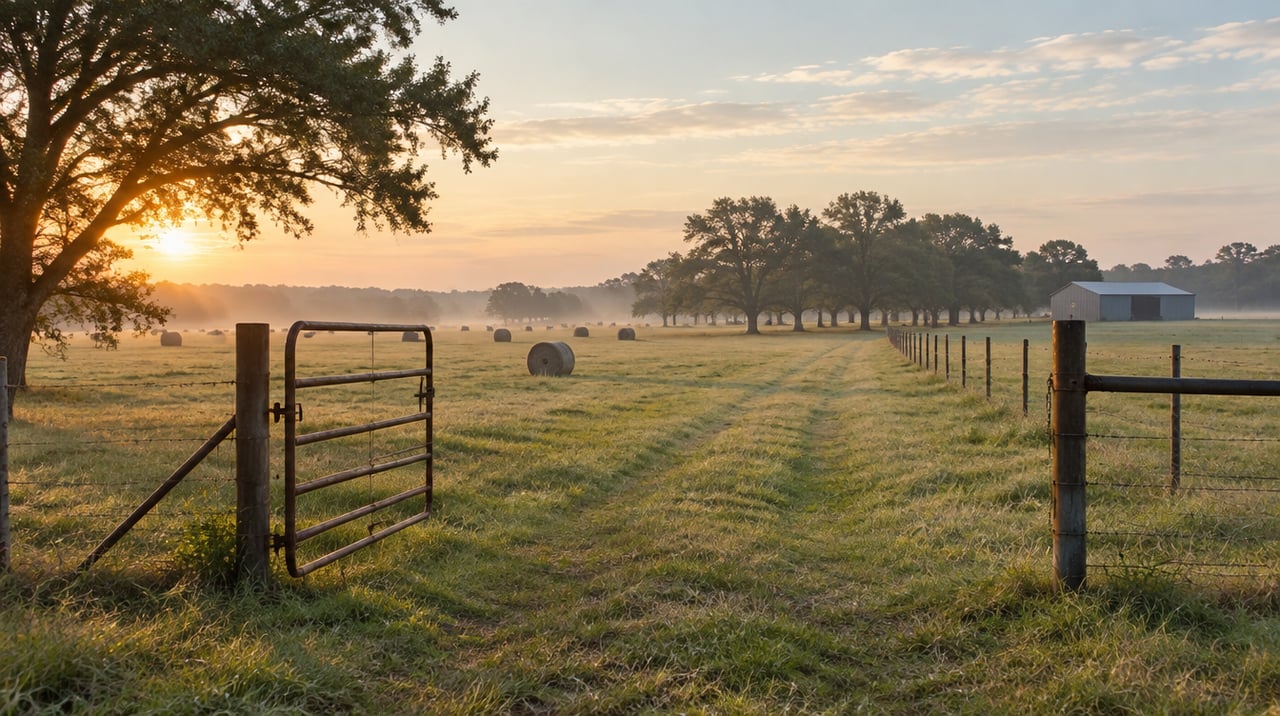
The TREC Farm and Ranch Contract is the Texas Real Estate Commission's promulgated form (TREC No. 25-17) for selling an existing farm or ranch of any size. Its own cover line says it is not for complex transactions. If a deal involves minerals, water rights, subdivisions, or heavy seller financing, you use it plus addenda, or you bring in an attorney. Damon Williamson of The Agency Dallas walks through when the TREC Farm and Ranch Contract fits and when it does not.
What is the TREC Farm and Ranch Contract?
TREC Form 25-17 is the standard contract Texas licensees use when the property is a farm or ranch rather than a house on a city lot. The footer on the current form is dated 05-04-2026. The form states that it is "Designed For Use In Sales Of Existing Farms Or Ranches Of Any Size. Not For Use In Complex Transactions." (Source: TREC Form 25-17, reviewed October 19, 2026.)
The form runs 23 numbered paragraphs. It covers the same ground as a residential contract, then adds land-specific items such as crops, surface and natural resource leases, groundwater and surface water disclosure, and rollback taxes. Because it is promulgated, an agent cannot rewrite its printed text. Changes go in Special Provisions or in addenda.
Damon Williamson, broker and owner of The Agency Dallas, uses the TREC Farm and Ranch Contract as the base document on most acreage deals, then layers on what the specific property needs. You can see how that fits the full buying process in how buying land or a ranch in North Texas actually works.
When should you use the Farm and Ranch Contract instead of the residential contract?
Use the Farm and Ranch Contract when the land is the main event. A good rule is to ask which part of the property drives the price.
- Use Form 25-17 when the value is mostly acreage, with or without a barn, a house, or a pond.
- Use the residential resale contract when the value is mostly a house and the lot is a lot.
- Use an unimproved property contract when there is raw land with no improvements to speak of.
- Call an attorney when the deal is complex: subdividing, a lease-back, seller financing, or a mineral carve-out you want drafted precisely.
The test is not acreage alone. A 10-acre property with a custom home on it may belong on a residential form. A 10-acre property with pasture, a well, and an ag valuation usually belongs on the farm and ranch form.
What is in the main paragraphs of Form 25-17?
The form's own paragraph headings tell you where buyers and sellers actually negotiate:
- Property (Paragraph 2): land, improvements, accessories, crops, exclusions, and reservations. Mineral reservations are handled here and in the Addendum for Reservation of Oil, Gas, and Other Minerals.
- Leases (Paragraph 4): residential, fixture, natural resource, and surface leases. A grazing or hay lease on the property needs to be listed here.
- Earnest Money and Termination Option (Paragraph 5): the option period, which is the buyer's negotiated right to walk away.
- Title Policy and Survey (Paragraph 6): commitment, survey, objections, and exception documents. On acreage the survey is rarely optional.
- Property Condition (Paragraph 7): access and inspections, "as is" acceptance, environmental matters, and the groundwater and surface water disclosure in Paragraph 7K.
- Prorations and Rollback Taxes (Paragraph 13): who pays if a change of use triggers a rollback.
For the survey and inspection side, read what surveys and inspections you need when buying acreage in Texas.
How do rollback taxes work under the Farm and Ranch Contract?
Paragraph 13 deals with prorations and rollback taxes. Rollback taxes are back taxes owed when land that received a special valuation, such as agricultural valuation, changes use. The Texas Comptroller's chart says the bill covers the previous three years of taxes. For agricultural land under Tax Code Section 23.46, the chart lists interest at 1 percent per month or portion of a month. (Source: Texas Comptroller, land use bills chart, reviewed October 19, 2026. The Comptroller notes the chart is informational and advises consulting an attorney.)
The practical point for a contract is simple: decide before you sign who pays if the buyer changes the use. Most buyers who keep the land in ag use never trigger it. A buyer who plans to subdivide or build a non-ag development should expect to deal with it.
We cover the mechanics in how rollback taxes work when buying land in Texas and on our rollback taxes page.
What does the Farm and Ranch Contract not do well?
The form is a sound base, but it has limits. Watch for these:
- Minerals. The form does not decide what you are really getting underneath the surface. Read what to know about mineral rights when buying land in North Texas before you write an offer.
- Water. Paragraph 7K requires a disclosure. It does not tell you whether a well is adequate or what water rights transfer. See how water rights work when purchasing a Texas ranch.
- Financing. Land loans have their own rules. See how land loans work in Texas.
- Complex deals. The form itself says it is not for complex transactions.
How should a buyer read the contract before signing?
A working process I use with buyers at The Agency Dallas:
- Confirm the correct form for the property type.
- Read Paragraphs 2, 4, and 13 first, because land-specific issues sit there.
- Order the survey early and read the title commitment exceptions.
- Set the option period long enough to inspect access, fences, water, and any lease.
- Put anything unusual in writing as an addendum or special provision.
- Have an attorney review anything the form is not built for.
Damon Williamson and The Agency Dallas treat the TREC Farm and Ranch Contract as a checklist as much as a contract. If a paragraph does not match your deal, that is a signal to change something before you sign, not after.
Frequently asked questions
What is the TREC Farm and Ranch Contract number?
The current form is TREC No. 25-17. TREC promulgates the form, and its footer is dated 05-04-2026. Agents must use the current promulgated version rather than an older copy. Always confirm you have the latest version from TREC before drafting an offer.
Can I use the residential contract to buy a ranch?
You can for a small property where the house drives the price, but the farm and ranch form is built for land. It addresses crops, natural resource leases, and groundwater and surface water disclosure. If land is the main value, Form 25-17 is the better starting point.
Does the Farm and Ranch Contract cover mineral rights?
It addresses mineral reservations in Paragraph 2 and refers to an addendum for reservation of oil, gas, and other minerals. It does not tell you who owns what in your specific chain of title. That takes a title review, and often an attorney or landman.
Who pays rollback taxes?
The form deals with rollback taxes in Paragraph 13, Prorations and Rollback Taxes. Who pays is a negotiated term. If the buyer changes the land's use after closing, the rollback bill typically follows that change. Put your agreement in the contract so there is no dispute later.
Do I need an attorney for a ranch purchase in Texas?
Not always, but the form says to consult an attorney before signing, and it is not for complex transactions. If your deal has subdividing, seller financing, mineral carve-outs, or leases, an attorney is a sound addition.
If you are weighing a ranch purchase or sale, talk with Damon Williamson at The Agency Dallas. You can also read about selling a family ranch in Texas, how Dallas property taxes compare to California, or buying a hunting ranch in East Texas.
Talk with Damon
Buying or selling land in Texas? Damon Williamson can explain which TREC contract fits your deal and what to check before you sign.