What makes a great home office comes down to five things: a door that closes, real quiet, good natural light, dependable power and internet, and a room that still works as a bedroom, study, or guest space when you sell. For buyers and sellers in Dallas-Fort Worth, the best home offices serve both today's workday and tomorrow's resale.
That balance matters here more than in many places. According to a U.S. Census Bureau story published January 16, 2025, 13.8% of U.S. workers usually worked from home in 2023, down from 17.9% in 2021 but more than double the 5.7% recorded in 2019. The Dallas Regional Chamber's 2025 Economic Development Guide, citing Census American Community Survey 1-year estimates, lists 16.5% of workers in its coverage area as working at home. And in a SmartAsset ranking reported by CultureMap Dallas in January 2026, Frisco had the highest remote-work share among the large U.S. cities studied, at 33.7% of workers in 2024, with McKinney at 26.7%.
At The Agency Dallas, we treat what makes a great home office as a practical question about how a house lives, not a staging trick.
What features matter most in a home office?
Start with the basics that are hardest to add later. A pretty desk can be bought in an afternoon. A quiet room with a door and a good window is part of the floor plan.
- A real door. French doors look lovely, but solid doors block sound far better. If a room has glass doors, ask whether solid replacements would fit the frame.
- Distance from noise. An office off the kitchen or above the garage hears everything. A room at the end of a hall, or on a separate wing, usually works better for calls.
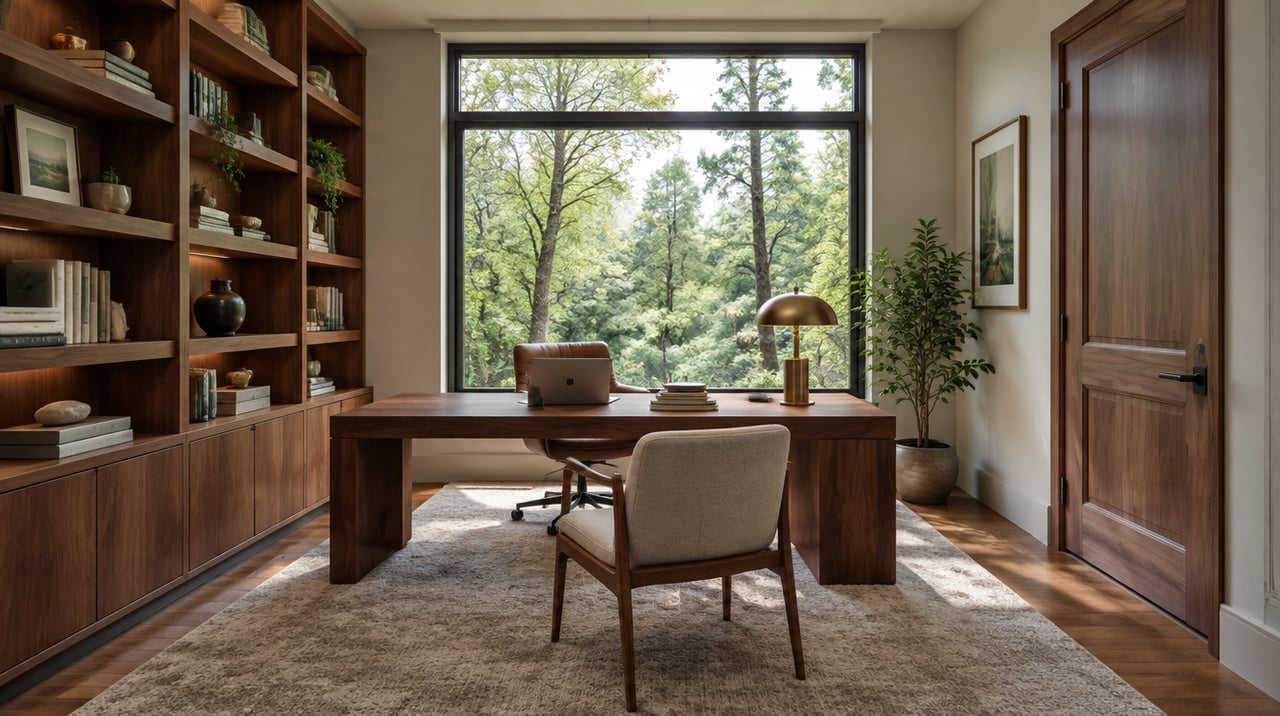
- Natural light from the side. A window beside the desk is easier on video calls and screens than one directly behind you or in front of you.
- Enough outlets on more than one wall. Older homes often have few outlets per room. Adding circuits is possible, but it is cheaper to know before you buy.
- Hardwired internet options. A wired connection, or at least a strong access point near the room, makes daily work more reliable.
- Storage that closes. A closet or built-in cabinetry keeps printers, files, and cords out of sight on camera.
- Comfortable climate control. Rooms over garages and on west-facing walls can run hot in a Texas summer. Ask how the room is served by the HVAC system.
How big should a home office be?
There is no single right size. A one-person office needs room for a desk, a good chair that can roll back, and some storage. Two people working at once usually need two separate rooms, because shared offices rarely work for overlapping calls. If your household has two remote workers, put "two closable rooms" on your search list early, since that changes which homes qualify.
How do I check internet service before buying a home?
Internet is the one home office feature you cannot see on a tour. Before you write an offer, check what providers actually serve the address.
- Search the address on the FCC National Broadband Map at broadbandmap.fcc.gov. According to the FCC's help center, the map shows which providers report service at a location, along with the technology and advertised speeds.
- Confirm directly with the providers listed for that address. Ask whether service is active at the home today.
- Ask the seller what they use and whether they have had outages.
- Run a speed test during your showing if the seller allows it, ideally from the room you plan to use as an office.
- Look for wiring. Ethernet jacks in walls, a structured media panel, or conduit to the attic can make upgrades easier.
This step matters most on acreage and in newer edges of the metro, where service can vary from one road to the next. If you are weighing a property outside the city, the same diligence belongs on your list with water, access, and surveys.
What makes a home office good for resale in Dallas-Fort Worth?
A great home office for resale is one the next owner can use in more than one way. In our view, rooms with a closet, a window, and a door give buyers the most options, because the same room can be marketed as an office, a bedroom, or a guest suite. Whether a room may be called a bedroom in a listing depends on local code and how it is built, so confirm that before you advertise it as one.
Here is how we think about home office choices with resale in mind:
- Keep built-ins flexible. Custom desks and floor-to-ceiling shelving can be beautiful, but very specific setups (a fixed desk for one specific monitor layout, for example) can read as work to remove. Freestanding pieces or shelving that can be repurposed are safer.
- Choose quiet, neutral finishes. Wood paneling, a deep paint color, or wallpaper can make a study feel finished. Just keep it reversible if you plan to sell within a few years.
- Do not sacrifice a bedroom count lightly. Removing a closet to make a wider office can change how a home is listed and compared. Talk with your agent before you take out a closet.
- Document upgrades. Added circuits, wired networking, and sound insulation are easy for buyers to overlook. Keep receipts and permits so your agent can describe them.
When it is time to sell, a calm, well-lit office photographs well and helps buyers picture their own routine. Our guide on how to make your home stand out online covers how to present a room like this in listing photos, and our post on repairs and staging worth doing before you sell covers what is worth fixing first.
Where should a home office be located in the house?
Placement shapes how the room works day to day. The answer depends on who is home during the workday.
Is a front-of-house study or a back bedroom better?
A study near the front door works well for clients or visitors, and it keeps work separate from family areas. It can also be closer to street noise. A back bedroom is usually quieter but may share walls with children's rooms or a media room. Many North Texas floor plans place the study just off the entry, so test the noise there during a showing.
What about a casita, garage apartment, or detached studio?
A separate structure offers the clearest line between work and home. It also adds questions: Is it permitted, is it heated and cooled, does it have its own internet, and does your neighborhood allow it to be used this way? If you are buying a property with an outbuilding, ask for permit history and confirm zoning or HOA rules before you plan around it. The same thinking applies to outdoor rooms, which we cover in what makes a great outdoor living space.
Does where I work change which home office I need?
Yes. A fully remote worker needs a dedicated, quiet room. A hybrid worker who commutes two or three days a week may be happy with a smaller study or a flexible guest room. If your commute matters, our guide on choosing a Dallas-Fort Worth neighborhood based on where you will work can help you balance drive time against space. Buyers comparing the northern suburbs may also find our post on Plano, Frisco and McKinney useful.
If you are self-employed, the IRS home office deduction has specific rules. The IRS says you must regularly use part of your home exclusively for business and show that it is your principal place of business. Those rules are detailed and change over time, so talk with your CPA before you count on a deduction.
When our agents help clients think through what makes a great home office, The Agency Dallas focuses on the room's bones (door, window, quiet, power, internet) before the furniture. Those are the features that serve you while you live there and that the next buyer will notice.
Frequently asked questions
What is the most important feature of a home office?
A door that closes is usually the most important feature, followed closely by quiet and reliable internet. A closed door separates work from the rest of the house, keeps calls private, and lets the room double as a bedroom or guest room later. Furniture and decor are easy to change, but a room's door and location are part of the floor plan.
Can a home office count as a bedroom when I sell?
Sometimes. Whether a room can be listed as a bedroom depends on how it is built and on local code, which often looks at things like a window that can be used for exit and a closet. Talk with your agent and check with your city before you advertise an office as a bedroom, and keep permits for any changes you made.
How do I find out what internet is available at a Dallas address?
Search the address on the FCC National Broadband Map at broadbandmap.fcc.gov, which shows providers that report service there along with technologies and advertised speeds. Then confirm with those providers directly and ask the seller what they use. If possible, run a speed test from the room you plan to work in during your showing.
Is a detached studio or casita a good home office?
It can be an excellent one, because it creates a clear line between work and home. Before relying on it, confirm that it was permitted, that it has heating, cooling, and internet, and that zoning or HOA rules allow the use you have in mind. Ask for permit history during your option period, and talk with your attorney if questions come up.
Can I deduct my home office on my taxes?
It depends on your situation. The IRS says the space must be used regularly and exclusively for business and must be your principal place of business, and the rules are detailed. Rules for employees and the self-employed can differ. Talk with your CPA about your specific facts before you make decisions based on a deduction.