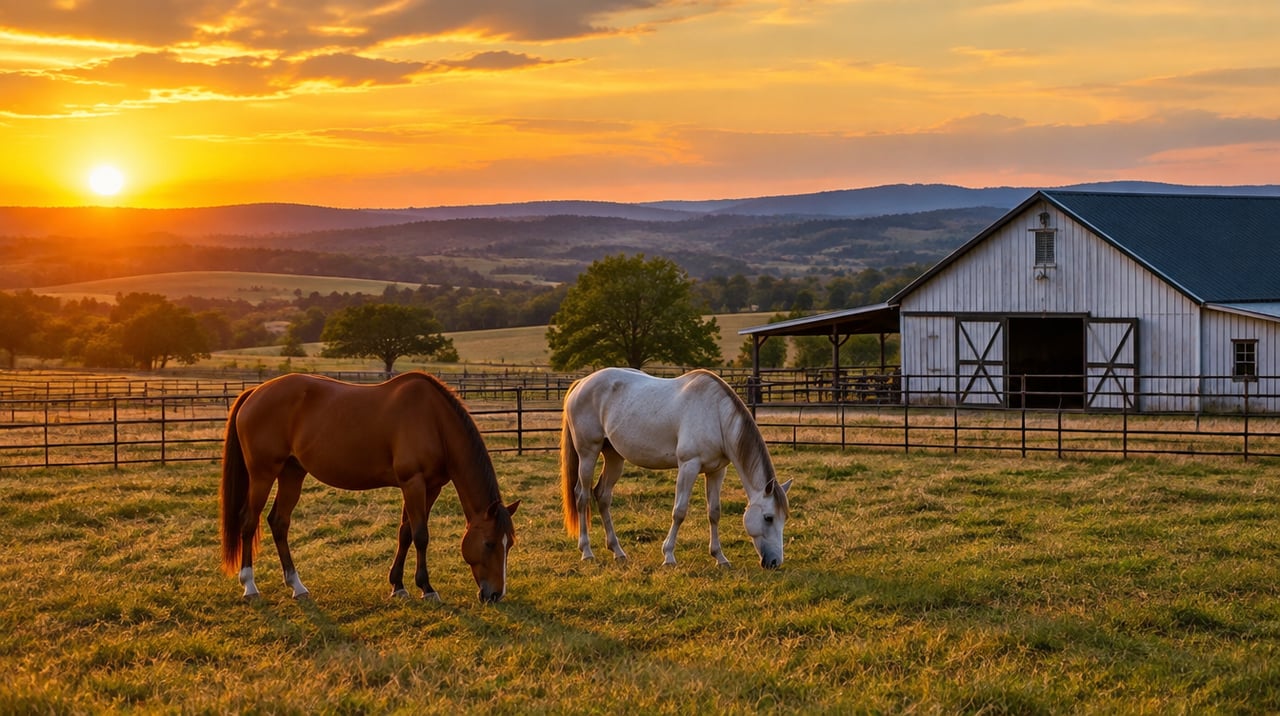
If you are asking how to move to Texas with horses, the short answer is paperwork first, property second. Every horse entering Texas needs proof of a negative equine infectious anemia (EIA, or Coggins) test from the previous 12 months and a certificate of veterinary inspection issued within 30 days of entry. Then you need land, fencing, water and shelter that actually suit the horses you own.
At The Agency Dallas, our Land and Ranch agents treat moving to Texas with horses as two projects that must line up: getting the animals here legally, and finding land that works for them. Below is what the state requires, how to plan the trip, and what to look for in a North Texas horse property. This is general information, not veterinary or legal advice. Your veterinarian and the Texas Animal Health Commission (TAHC) are the final word on any individual move.
What paperwork does Texas require to bring a horse into the state?
According to the TAHC's equine movement requirements summary (current as of April 29, 2022) and Texas Administrative Code Title 4, Section 51.13, horses, mules, donkeys and other equidae entering Texas generally need two documents:
- A negative EIA test within the previous 12 months. This is the Coggins test. The 12 months run backward from the day the horse enters Texas, not from the day you leave.
- A certificate of veterinary inspection (CVI) issued within 30 days before entry. Your home-state veterinarian issues the CVI after examining the horse.
The TAHC summary also lists situations where the rules tighten or change:
- Vesicular stomatitis (VSV): horses coming from a VSV-affected state need a CVI issued within 14 days of entry.
- Equine viral arteritis (EVA): horses from an EVA-quarantined area need a CVI stating no clinical signs and a rectal temperature of 101 degrees Fahrenheit or less at the exam.
- Shows and events: horses entering for an event may use an equine interstate passport or ID card with an official negative EIA test from the previous 6 months, if both states participate.
- Nursing foals: foals under 8 months traveling with a dam that has a current negative test are excepted.
- Piroplasmosis: a negative test is not required for general entry, but horses entering a Texas racetrack facility need a negative piroplasmosis test within the past 12 months.
An entry permit is generally not required for a standard move. Rules change during outbreaks, so have your veterinarian recheck requirements the week you ship.
Do I need a Coggins test after the horse is already in Texas?
Yes, in two common situations. Under Texas Administrative Code Section 49.1, a negative EIA test within the previous 12 months is required when a horse changes ownership in Texas, and for horses participating in any assembly, which the rule defines to include events such as rodeos, roping events, parades and trail rides. Keep the test current every year and keep a copy in the trailer.
How should I plan the trip itself?
Timing is where moves go wrong. Because the CVI window is 30 days (or 14 days from a VSV-affected state), the vet appointment usually needs to happen within a few weeks of departure, while the Coggins can be drawn earlier as long as it will still be inside its 12-month window on arrival.
A practical sequence:
- Six to eight weeks out: confirm the destination is ready (fencing, water, shelter) or book a boarding barn near your new home.
- Four to six weeks out: pull a Coggins if the current one will expire before arrival. Results take time.
- Within 30 days of entry: veterinary exam and CVI. Ask your vet to note any destination-specific statements.
- The week of the move: recheck the TAHC requirements page for outbreak notices, and plan hauling around Texas heat. Summer hauling is easier early in the morning or overnight.
- On arrival: keep horses apart from a new herd for a quiet period, and line up a Texas veterinarian early.
If you hire a commercial hauler, ask how they handle rest stops, water and heat, and keep copies of the CVI and Coggins with the horses.
What should I look for in a North Texas horse property?
Our agents at The Agency Dallas approach moving to Texas with horses by starting with the horses and working backward to the house, because a beautiful home on the wrong land becomes an expensive problem.
How many acres do I need per horse?
Extension Horses, the national Cooperative Extension resource, gives a rule of thumb of 1.5 to 2 acres of open, intensively managed land per horse, and notes that the figure is highly variable by location. In North Texas, soil, rainfall, grass type and how much you plan to feed hay all change the answer. Many owners plan on more land than the rule of thumb so pastures can be rotated and rested.
What fencing is safest for horses?
A Texas A&M College of Veterinary Medicine "Pet Talk" article (February 27, 2015) cautions against three-strand barbed wire where horses are housed across a fence from each other, because they can strike and injure their heel bulbs. It notes barbed wire may be reasonably safe in very large pastures where horses do not face each other, and that wood or synthetic plank can be dangerous if it splinters. Many Texas ranches were fenced for cattle, so budget for upgrades such as pipe, no-climb wire or electric offset lines. Our guide to fencing, easement and access issues on Texas land covers boundary questions in more detail.
What else belongs on the checklist?
- Barns and shelter: stall count and size, ventilation, aisle width, tack and feed storage, hay storage away from the barn, and whether the roof and electrical are in good shape.
- Water: reliable water to every pasture and stall. Ask whether the property uses a well, rural water supply or ponds, and learn how water rights work on Texas land.
- Footing and drainage: blackland clay common east and north of Dallas can turn slick and hold water after rain. Look at arenas, gates and walkways after a storm if you can.
- Access: a driveway and turnaround that fits a truck and gooseneck trailer.
- Septic: many rural horse properties use on-site sewage systems. The Texas Commission on Environmental Quality notes that a permit is required to construct, alter, extend or repair one, so ask for records.
- Surveys and inspections: see our list of surveys and inspections for acreage.
Does zoning allow horses where I want to buy?
It depends on whether the property is inside a city. Texas cities can zone land and limit livestock. Counties are different: as Texapedia summarizes, Texas counties generally may not adopt zoning ordinances, with narrow exceptions, though cities can apply subdivision and development rules in their extraterritorial jurisdiction. Deed restrictions and HOA covenants can also limit horses, even in the country.
Can horses qualify a property for agricultural valuation?
Sometimes, but not because you own horses. The Texas Comptroller's Manual for the Appraisal of Agricultural Land (October 2024) says raising, breeding or grazing horses can be an agricultural use, but use that is principally recreational or a hobby is not, and land used to show, train, stable or race horses is not eligible. Texas A&M AgriLife's sample county guidelines list similar exclusions for recreational riding and boarding. Each county appraisal district sets its own standards, so the answer is local. Our page on the Texas ag exemption explains more. Talk to your CPA and the appraisal district before counting on it.
Is a horse property near Dallas realistic?
Yes, with tradeoffs. Fast growth north and east of Dallas is subdividing some acreage, while land farther out means a longer drive. Our post on which North Texas suburbs are growing fastest shows where development pressure is strongest. For owners who also want water, our guide on buying a lake house covers shoreline rules. The right fit for moving to Texas with horses is the one that matches your discipline, herd size and daily routine.
Frequently asked questions
What tests does a horse need to enter Texas?
A horse entering Texas generally needs proof of a negative equine infectious anemia (Coggins) test within the previous 12 months and a certificate of veterinary inspection issued within 30 days before entry, according to the Texas Animal Health Commission. Horses from states with vesicular stomatitis need a CVI within 14 days. Your veterinarian should confirm current requirements before you ship.
Do I need an entry permit to bring my horse to Texas?
For a standard move, the Texas Animal Health Commission says an entry permit is generally not required. Permits come into play for certain exceptions, such as horses going directly to a veterinary clinic for treatment or to an approved lab before a livestock market. Requirements can change during outbreaks, so check with the commission before you load the trailer.
Is a piroplasmosis test required to move horses to Texas?
Not for general entry. The Texas Animal Health Commission's summary says a negative piroplasmosis test is not required unless otherwise noted, but horses entering a racetrack facility need a negative test within the past 12 months. Many events set their own requirements, so racing and competition horses should be checked with the event organizer and your veterinarian.
How many acres do I need for one horse in North Texas?
Extension Horses suggests 1.5 to 2 acres of open, intensively managed land per horse as a starting point, and stresses that it varies by location. North Texas soil, rainfall and grass type matter, as does how much hay you feed. Many owners choose more land so pastures can rest. A local extension agent can help size your plan.
Will my horses get me an agricultural valuation in Texas?
Only if the land is used for a qualifying agricultural purpose. The Texas Comptroller's manual says raising, breeding or grazing horses can qualify, but recreational or hobby use does not, nor does land used to show, train, stable or race horses. Each county appraisal district sets its own standards, so talk to your CPA and the district first.
Can I keep horses on any rural Texas property?
Not always. Properties inside city limits follow city zoning, which may limit livestock. Outside cities, counties generally cannot zone, but deed restrictions and HOA covenants can still prohibit or limit horses. Read the restrictions, confirm water and access for a trailer, and check fencing before you make an offer on any property intended for horses.