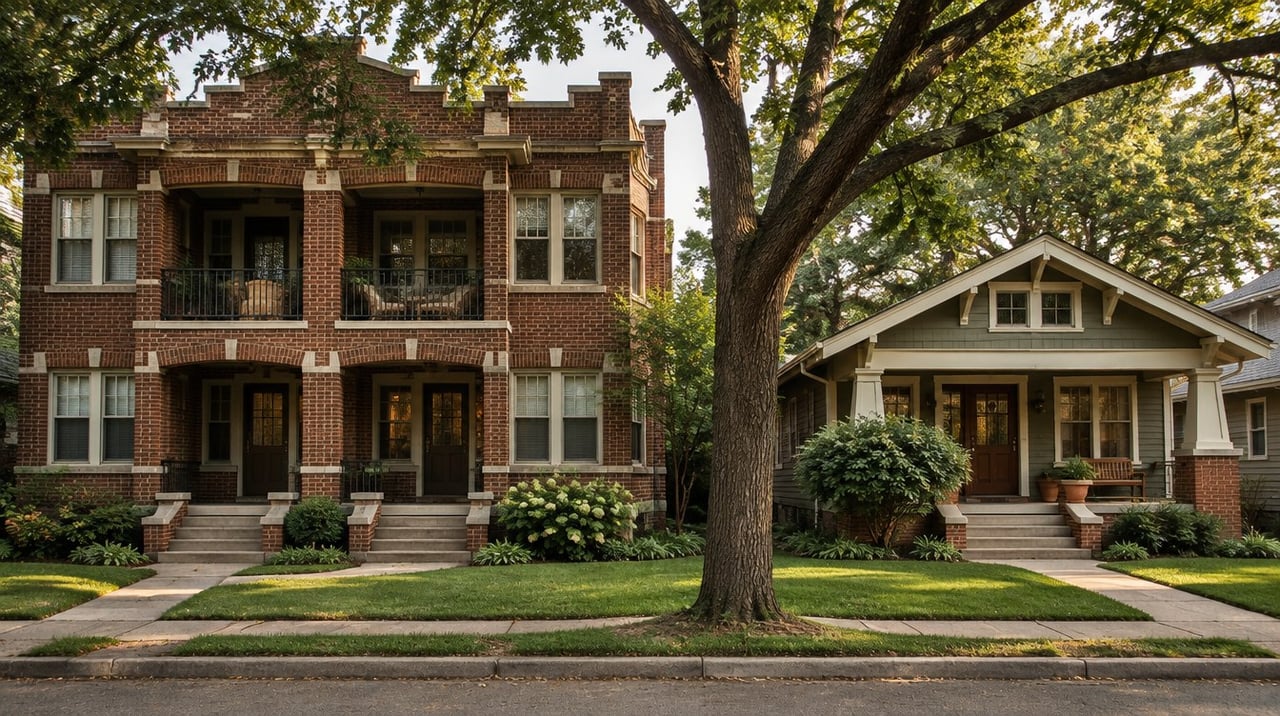
Should you invest in Dallas single-family homes or small multifamily properties? For most first and second purchases, single-family homes are easier to finance, insure, resell and keep leased, while small multifamily (two to four units) spreads vacancy risk across several tenants and can be bought with a lower down payment if you live in one unit. The right choice depends on whether you will occupy the property, how much hands-on management you want, and how you plan to exit.
The Agency Dallas helps investors compare single-family and small multifamily properties across Dallas-Fort Worth, from reviewing rent assumptions to touring buildings; our buyer guide explains how we work with purchasers.
What is the core difference between single-family and small multifamily investing in Dallas?
A single-family rental is one house, one lease and one tenant household. A small multifamily property is a duplex, triplex or fourplex: one deed, two to four leases. Both are financed as residential real estate as long as the building has four units or fewer. Once a building reaches five units, lenders treat it as commercial, which changes the loan, the appraisal and the underwriting.
Financing is where the two have moved apart most recently. In November 2023, Fannie Mae announced it would allow a 5 percent down payment on owner-occupied two- to four-unit homes, down from the 15 to 25 percent it had required before (Fannie Mae announcement, November 2023, as reported by lenders including CMG Financial). That option applies only if you live in one of the units. A pure investor buying a duplex still faces investor down payments and pricing.
Property taxes are the second moving piece. Texas's 20 percent annual cap on appraisal increases for non-homestead property valued at $5 million or less (Texas Tax Code §23.231) is scheduled to expire on December 31, 2026. Both property types are affected; we explain what that means in our post on the expiring 20 percent cap.
When does a single-family rental make more sense?
The Agency Dallas generally sees single-family investing fit owners who want a simpler first rental and a broad pool of future buyers. Reasons it often wins:
- Resale liquidity. A single-family home can be sold to an owner-occupant or an investor, so the buyer pool is larger than for a duplex.
- Tenant profile. Single-family tenants in North Texas suburbs often stay longer, particularly families tied to a school district.
- Simpler operations. One roof, one HVAC system per unit, one lawn and one lease to manage.
- Appreciation exposure. Single-family values track the owner-occupant market, which matters if part of your return is long-term appreciation rather than cash flow.
- HOA-governed options. Many newer suburban neighborhoods are single-family only, which gives investors access to areas with no duplex inventory, though HOA leasing rules need to be checked first.
When does small multifamily make more sense?
Small multifamily tends to suit investors who want income from several units on one lot and are comfortable with more management. Reasons it can win:
- Vacancy is spread out. One empty unit in a fourplex cuts income by roughly a quarter, not all of it.
- House hacking. Living in one unit and renting the others can qualify you for owner-occupied financing, including the 5 percent down option noted above.
- Expense efficiency. One roof and one property tax bill cover several rent checks.
- Value-add room. Older duplexes and fourplexes in established Dallas neighborhoods can have rents below market, which leaves room for improvement after renovation.
The trade-off is that Dallas small multifamily inventory is concentrated in older, close-in neighborhoods, so you are more likely to deal with older plumbing, electrical and foundations. Budget for inspections that match the building's age.
How do the numbers compare?
We cannot give a single answer, because rent, taxes and insurance vary block by block. What we can do is run both property types through the same tests. Start with the three checks in our guide to analyzing a Dallas rental before making an offer:
- Rent-to-price ratio. Monthly rent divided by purchase price; see what rent-to-price ratio to look for.
- Cap rate. Net operating income divided by price; see typical DFW cap rates.
- Cash-on-cash return. Annual cash flow after debt service divided by the cash you invested.
Property taxes and insurance often decide the comparison in Texas. A duplex and a single-family home at the same price can carry similar tax bills but very different insurance quotes, especially for older roofs. Our post on how property taxes and insurance affect rental returns walks through that math.
What expenses do investors underestimate on small multifamily?
Common ones include separate water and sewer metering (or the lack of it), turnover costs across several units, and city requirements such as rental registration or inspections, which vary by municipality. Ask the seller for actual utility bills and leases, not projections.
What expenses do investors underestimate on single-family rentals?
Lawn care if the lease puts it on the owner, HOA dues and special assessments, and longer vacancy if the home is priced at the top of its neighborhood's rent range.
Which Dallas-Fort Worth areas fit each strategy?
Single-family rental demand is broad across the suburbs, and we cover several of them in our look at DFW suburbs for buy-and-hold investing. Small multifamily is more limited by zoning; most duplex and fourplex stock sits in older Dallas neighborhoods and inner-ring suburbs where it was built decades ago. If you prefer a specific suburb, check whether duplexes exist there at all before you set a strategy.
How should I decide?
Answer these five questions honestly:
- Will you live in the property? If yes, small multifamily financing becomes much more attractive.
- Do you want to self-manage? Several tenants means several calls.
- What is your exit? Single-family homes resell to a wider market.
- Is your return mostly cash flow or appreciation?
- Do you plan to trade up later through a 1031 exchange? See how a 1031 exchange works in Texas.
If you are also weighing who to ask for advice along the way, our companion post on who offers the best advice for real estate investing in Dallas-Fort Worth maps which professional answers which question. Owners who already hold several rentals can read who can value an investment property portfolio in Dallas, and land-minded investors may want our guide to buying a hunting ranch in East Texas.
If you are planning a purchase in this area, The Agency Dallas can walk you through what is on the market now; you can reach our team through our contact page.
Frequently asked questions
Is a duplex a good first investment property in Dallas?
A duplex can be a strong first investment if you plan to live in one side, because owner-occupied financing on two- to four-unit homes can require as little as 5 percent down under Fannie Mae's November 2023 change. If you will not live there, compare it carefully with a single-family rental, which is usually easier to resell and finance as a pure investor.
At how many units does a property become commercial?
Lenders generally treat buildings with one to four units as residential and buildings with five or more units as commercial. That line changes the loan type, down payment, appraisal approach and underwriting. A fourplex can still be financed with a residential mortgage, while a five-unit building typically needs a commercial loan based mainly on the property's income.
Do property taxes differ between single-family and multifamily rentals in Texas?
Both are taxed at the same local rates based on appraised value, and neither qualifies for a homestead exemption unless you live there. The bigger 2026 issue for both is that Texas's 20 percent cap on appraisal increases for non-homestead property valued at $5 million or less is scheduled to expire on December 31, 2026, under Texas Tax Code section 23.231.
Which is easier to sell later, a single-family rental or a fourplex?
A single-family rental is usually easier to sell because both owner-occupants and investors can buy it. A fourplex appeals mostly to investors and owner-occupants willing to be landlords, so the buyer pool is narrower. Pricing also differs: single-family homes are valued mainly on comparable sales, while small multifamily buyers weigh rents and expenses more heavily.
How does The Agency Dallas help with an investment purchase?
The Agency Dallas helps investors compare single-family and small multifamily options, request leases and expense records from sellers, review rent and tax assumptions, and schedule inspections suited to a building's age. Our agents represent buyers under a written buyer agreement, and we can coordinate with your lender, CPA and property manager before you make an offer.
Sources: Fannie Mae announcement on 5 percent down for owner-occupied 2-4 unit homes (November 2023); Texas Tax Code §23.231.