The Swiss Avenue Historic District is a City of Dallas Landmark District, so nearly all exterior work on a property there needs a Certificate of Appropriateness before it starts. Small repairs that keep the same design and materials are reviewed by City staff. Additions, new construction, demolition and design changes go before the Dallas Landmark Commission.
The Agency Dallas helps buyers and sellers in East Dallas, including the Swiss Avenue Historic District, understand what the district rules mean for a specific house before a contract is signed.
Why is Swiss Avenue such a big deal?
Every city has a street that people slow down on. In Dallas, it is Swiss Avenue. Drivers ease off the gas, joggers suddenly find a second wind, and out-of-town guests ask, "Wait, people actually live in these?" They do. And they have been protecting them for a very long time.
Swiss Avenue became Dallas's first historic district in 1973. The story behind it is pure Dallas: the demolition of an early home at 5009 Swiss Avenue alarmed neighbors, and residents organized to protect what was left. That same year, homeowners opened their doors for a home tour to raise money for the historic district effort. It worked, and the Swiss Avenue Home Tour has continued almost every year since, usually on Mother's Day weekend.
The district was listed on the National Register of Historic Places in March 1974 and received a State Historic Marker in 1977. Today it is still the address many people picture when they think of historic Dallas.
Where exactly is the Swiss Avenue Historic District?
The district covers both sides of Swiss Avenue between Fitzhugh Avenue and La Vista Drive, plus portions of nearby streets, including Bryan Parkway. Two details trip people up:
- Not all of Swiss Avenue is in the Swiss Avenue Historic District. Other stretches of the street run through the Peak's Suburban Addition neighborhood and its own historic district.
- The district sits next to Munger Place. Swiss Avenue was originally developed as part of the Munger Place addition, and the Munger Place Historic District is a separate district with its own ordinance.
The district covers roughly 57 acres. Before you assume an address is in or out, check the City of Dallas district map.
What makes the homes on Swiss Avenue different?
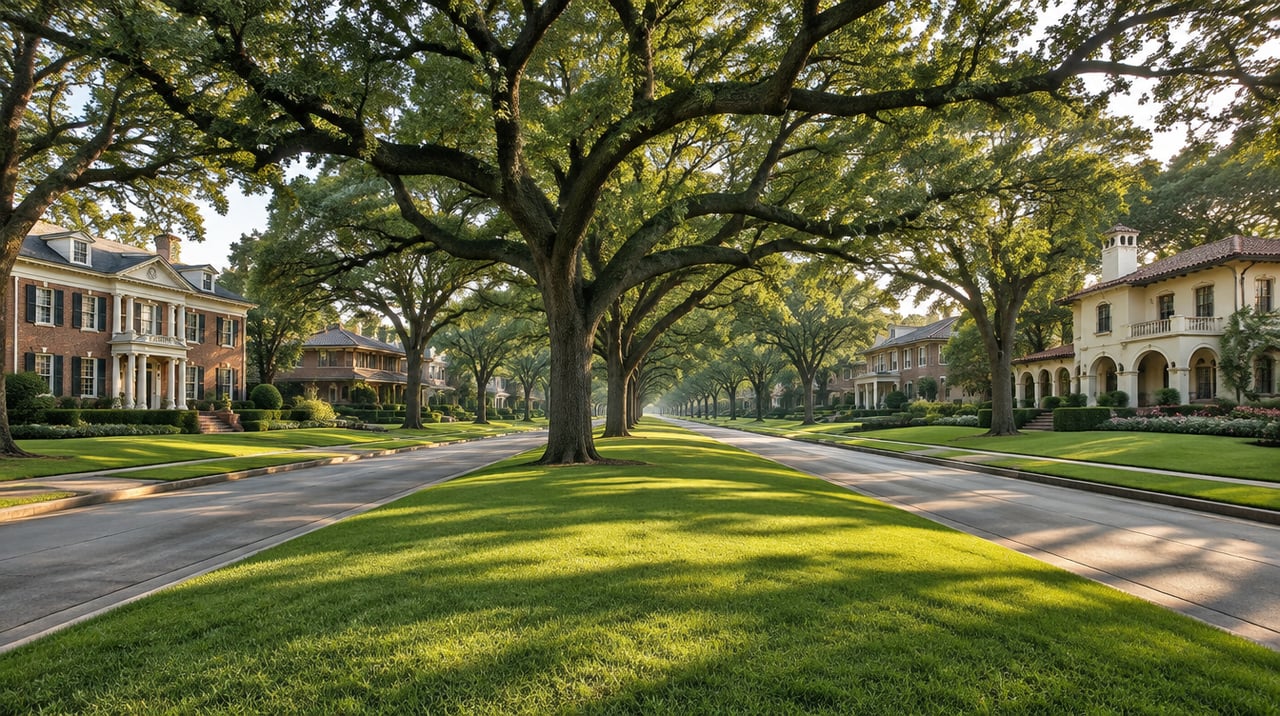
Swiss Avenue is known for large homes on deep lots, set behind wide, landscaped parkways that the City owns and maintains. The City's Office of Historic Preservation calls out those elegantly landscaped parkways and properties as part of what defines the district.
Architecturally, the street is a sampler of early twentieth century styles:
- Prairie-influenced homes with broad eaves and strong horizontal lines
- Georgian and Colonial Revival homes with formal, symmetrical facades
- Spanish Eclectic and Mediterranean-inspired homes with tile roofs and stucco
- Tudor and other European-inspired homes
- Craftsman and Arts and Crafts influences
Some of the most respected early Dallas architects worked here, including Hal Thomson and the firm Lang and Witchell. When you buy on Swiss Avenue, you are often buying a piece of the city's architectural history, sometimes with a famous name attached.
What rules apply in the Swiss Avenue Historic District?
The district is governed by its own ordinance, which the City lists as Ordinance No. 18563 (H/1), with a codified version that combines later amendments. The ordinance includes preservation criteria that guide what the Landmark Commission will approve. Here is how the process works in practice.
What needs a Certificate of Appropriateness?
According to the City of Dallas, a Certificate of Appropriateness is required before exterior work on any structure or site in a Landmark District. The City specifically lists:
- Work on any structure in the district, including non-contributing structures
- Work on the rear of a structure, not just the street-facing side
- Major landscaping changes
- Fences, gates, retaining walls and carports
- Landscaping features over six inches tall
Planting flowers in existing beds does not require one. When in doubt, the district's preservation planner can confirm whether a project needs a CA.
What counts as Routine Maintenance?
Routine Maintenance means minor repair work that does not change design, material or appearance. City staff review it, and the City says these reviews can take up to 21 days, though staff often finish sooner. Like-for-like repairs are the classic example. Routine Maintenance still requires a CA; it just takes a faster path.
What goes to the Landmark Commission?
Larger changes require full Landmark Commission review. That generally includes:
- Additions and second-story expansions
- New construction, including new accessory buildings
- Changes to a home's design, materials or appearance
- Demolition, which uses a separate Certificate for Demolition
Applications are due by noon on the fourth Monday of each month, a deadline the City describes as firm. For new construction and major remodels, the City asks applicants to review plans with the district's preservation planner before the submittal deadline.
What happens after approval?
- Post the signed Certificate of Appropriateness where it is visible on the property.
- Get any building permits you need. The building department requires the signed CA before issuing a permit.
- Keep the work moving. A CA lapses if continuous progress is not made for more than 180 days.
What if work is done without approval?
Neighbors in historic districts pay attention, and anyone can report a suspected violation through Dallas 311. If the City issues a Notice of Violation or Stop Work Order, work must stop and the owner needs to file for a CA. The City notes that a conviction can bring a fine of up to $2,000, along with possible civil penalties. For buyers, the bigger concern is inheriting someone else's unapproved work, which is why we always ask sellers for records of past approvals.
Can you tear down or rebuild a house on Swiss Avenue?
Very rarely. Demolition in a Dallas historic district requires a Certificate for Demolition, which follows the same review steps and timeline as a CA. Contributing historic houses are generally protected from demolition unless they cannot reasonably be repaired. If your plan for a property depends on a teardown, Swiss Avenue is probably not the right street. If your plan depends on restoring a remarkable house, it may be exactly the right one.
Is there a tax benefit to owning on Swiss Avenue?
Potentially. The City of Dallas offers historic tax exemptions for qualifying rehabilitation of designated landmarks and structures in Landmark Districts. The amount depends on the type of property and how much is invested in the rehabilitation. Owners must apply with the Dallas Central Appraisal District each year they are eligible. The program has specific steps and minimum spending requirements, so read the City's program materials early if a restoration is part of your plan. Our plain-English guide to East Dallas districts explains how the program fits alongside the rest of the rules.
What does it cost to own on Swiss Avenue?
Swiss Avenue homes span a wide range depending on size, lot and condition, and restoration budgets can be significant for larger homes. Our separate guide on what it costs to live on Swiss Avenue walks through purchase prices, taxes, insurance and upkeep.
How do you get a Certificate of Appropriateness on Swiss Avenue, step by step?
The process sounds intimidating until you see it laid out. Here is how a typical project moves from idea to approval in the Swiss Avenue Historic District, based on the City of Dallas process.
- Define the project in writing. Write down exactly what you want to change, where on the house or lot, and what materials you plan to use. Vague requests slow everything down.
- Read the district ordinance. The Swiss Avenue ordinance and its preservation criteria are published by the City. Find the sections that apply to your project, such as additions, fences, windows or accessory buildings.
- Call or email the district's preservation planner. The City assigns staff to each district. Ask whether your project is likely to qualify as Routine Maintenance or will need full Landmark Commission review. For new construction and major remodels, the City asks applicants to meet with the planner before the submittal deadline.
- Prepare drawings and photos. Most applications need current photos, drawings or elevations, and material details. An architect or experienced contractor can help. The City's checklist lists what is required, and incomplete applications are not docketed.
- Submit before the deadline. Applications for Commission review are due by noon on the fourth Monday of each month. Routine Maintenance requests are reviewed by staff on a rolling basis.
- Attend the hearing if your project goes to the Commission. The Landmark Commission may approve the request, approve it with conditions, or deny it without prejudice so you can revise and resubmit.
- Post the signed CA and pull permits. Building Inspection requires the signed CA before issuing a permit, and the CA must be posted where it is visible.
- Keep the work moving. A CA lapses if continuous progress stops for more than 180 days.
Most frustration in historic districts comes from skipping step three. A short conversation with the preservation planner before you design anything can save a month or more.
What are the most common myths about owning on Swiss Avenue?
Myth: "You can't change anything."
Not true. Owners on Swiss Avenue renovate kitchens, update systems, add rear additions and build new garages and accessory buildings. The rules are about how exterior changes look and what materials they use, and the process is about getting it right before the work starts. Interior work is generally outside the scope of the Certificate of Appropriateness, though building permits still apply.
Myth: "Only the front of the house matters."
The City specifically says a CA is required for work on the rear of a structure, too. On Swiss Avenue, where many homes sit on deep lots and corner lots are visible from more than one street, that matters.
Myth: "Small projects don't need approval."
Fences, gates, retaining walls and landscaping features over six inches tall all need a CA, according to the City. The review may be quick, but it is still required.
Myth: "Historic rules hurt home values."
The City's 2025 preservation study found that single-family homes in Dallas historic districts were valued about 15% above the rest of the city on average in 2024. Protection is part of what buyers pay for on a street like Swiss Avenue, where the character of the whole block is as valuable as any single house.
Myth: "The neighborhood association approves my plans."
The City of Dallas, through its preservation staff and the Landmark Commission, issues Certificates of Appropriateness. Neighborhood associations are often active and helpful, and many owners share plans with neighbors as a courtesy, but the approval comes from the City.
What does "contributing" mean for a Swiss Avenue house?
In a Dallas historic district, each property is classified as contributing or non-contributing. A contributing structure adds to the district's historic character, usually because it dates from the district's period of significance and keeps much of its original design. A non-contributing structure might be newer or heavily altered. Why it matters to you as a buyer:
- Contributing houses are generally held to the district's preservation criteria more closely, especially for demolition.
- The City's historic tax exemption program is tied to historic structures in Landmark Districts, so contributing status can affect eligibility.
- Non-contributing structures still need a CA for exterior work, according to the City, but the review considers how changes affect the district around them.
Ask for a property's status during your option period, and confirm it with City staff rather than relying on a listing description.
What should buyers check before buying on Swiss Avenue?
- Confirm the district and the house's status. Is the address inside the Swiss Avenue Historic District, and is the house contributing?
- Read the ordinance. Look at what it says about additions, height, materials, windows, fences and accessory buildings.
- Ask for past approvals. Request copies of Certificates of Appropriateness for past exterior work.
- Inspect like it is a hundred years old, because it is. Foundations, roofs, original wood windows, plumbing, electrical and drainage all deserve attention. Our guide on what to know before buying a historic home covers the inspection.
- Talk to the preservation planner early. If you are planning major work, a conversation with City staff during your option period can save months later.
- Plan the calendar. Landmark Commission projects follow a monthly cycle, so build approval time into your renovation and move-in plans.
What should sellers on Swiss Avenue know before listing?
- Organize your records. Approved CAs, permits, architect drawings and restoration receipts tell buyers the house has been cared for properly.
- Tell the house's story. Original architect, year built, notable restorations and home tour history all matter to buyers on this street.
- Address any unapproved work. Talk with your agent before listing about how to handle exterior work that may not have been approved.
- Know your tax exemption status. If the house has a historic tax exemption, buyers will want details.
Our seller guide covers the broader steps of preparing a Dallas home for market.
Swiss Avenue vs. nearby East Dallas districts
Swiss Avenue is the most famous, but it has neighbors worth knowing:
- Munger Place Historic District: the Prairie-style neighborhood Swiss Avenue grew out of.
- Junius Heights Historic District: a large Craftsman bungalow district to the east.
- Peak's Suburban Addition Historic District: Victorian and Prairie homes closer to downtown.
- Lakewood Conservation District: a conservation district, so the rules work differently.
If you are planning a purchase in this area, The Agency Dallas can walk you through what is on the market now; you can reach our team through our contact page.
Frequently asked questions
When did Swiss Avenue become a historic district?
Swiss Avenue was designated Dallas's first historic district in 1973, after residents organized to protect the street following the demolition of an early home. The district was listed on the National Register of Historic Places in March 1974 and received a State Historic Marker in 1977. It remains a Dallas Landmark District governed by its own ordinance and preservation criteria.
Do I need permission to paint or repair my Swiss Avenue house?
Exterior work in the Swiss Avenue Historic District requires a Certificate of Appropriateness. Repairs that keep the same design, material and appearance usually qualify as Routine Maintenance, which City staff review in up to 21 days. Changes to design or materials may need Landmark Commission review. Contact the district's preservation planner before starting any exterior project, including paint and repairs.
Can I build an addition on a Swiss Avenue home?
Additions are possible but require full Landmark Commission review and must meet the preservation criteria in the Swiss Avenue ordinance. Applications are due by noon on the fourth Monday of each month, and the City asks owners to review major remodels with the district's preservation planner first. Plan design, review and approval time before construction begins.
Is all of Swiss Avenue in the historic district?
No. The Swiss Avenue Historic District covers both sides of Swiss Avenue between Fitzhugh Avenue and La Vista Drive, plus parts of nearby streets such as Bryan Parkway. Other sections of Swiss Avenue run through the Peak's Suburban Addition neighborhood, which has its own historic district. Always confirm an address on the City of Dallas district map.
Can a house in the Swiss Avenue Historic District be demolished?
Demolition requires a Certificate for Demolition from the City of Dallas, which follows the same review steps as a Certificate of Appropriateness. Contributing historic homes are generally protected and are rarely approved for demolition unless they are beyond reasonable repair. Buyers planning to rebuild should look outside historic districts or confirm a property's status in writing first.
Sources: City of Dallas Office of Historic Preservation (Swiss Avenue Historic District page, Landmark Review Process, FAQ, tax incentive program); Swiss Avenue Historic District Neighborhood Association; National Register of Historic Places; Advocate Magazine. Confirm current requirements with the City before starting any project.