Peak's Suburban Addition is a City of Dallas historic district, adopted in 1995 as the city's fourteenth historic district, known for one of the highest concentrations of Victorian homes in Dallas along with Prairie homes and 1920s and 1930s streetcar apartments. Exterior work needs a Certificate of Appropriateness, and larger projects go before the Dallas Landmark Commission.
The Agency Dallas helps buyers and sellers in East Dallas, including Peak's Suburban Addition, understand what the historic district rules mean for a specific property before a contract is signed.
What makes Peak's Suburban Addition stand out?
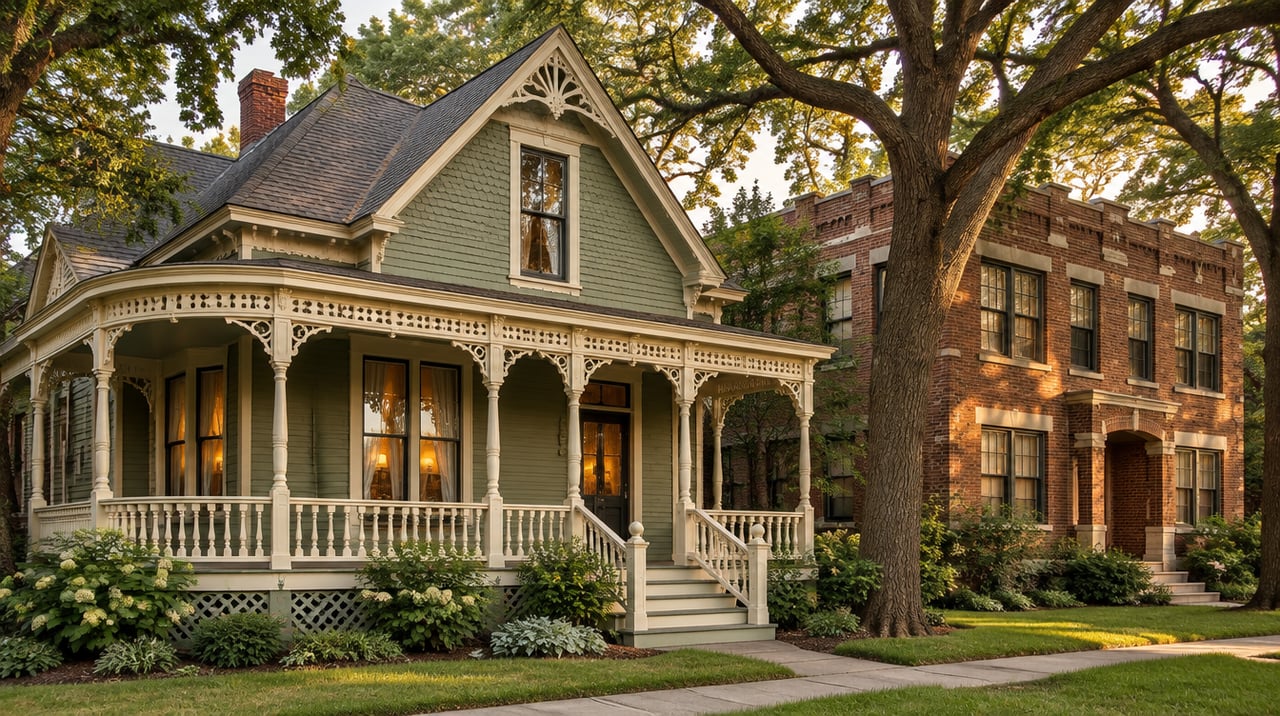
If Swiss Avenue is Dallas in a tuxedo, Peak's Suburban Addition is Dallas in a vintage cardigan with great stories. It is one of the oldest residential areas in the city, it sits closer to downtown than most East Dallas neighborhoods, and it has a little bit of everything: gingerbread-trimmed Victorians, sturdy Prairie homes, brick streetcar-era apartment buildings and a growing number of carefully restored houses.
It is not a neighborhood that hit pause. It is a neighborhood that has been through a lot, kept its bones and keeps coming back. That is exactly why buyers who love older homes keep finding it.
Where did Peak's Suburban Addition come from?
The neighborhood takes its name from the Peak family. Jefferson Peak platted the first of the family's subdivisions along Ross Avenue in 1874, and Peak and his son Junius Peak sold lots in Peak's Suburban Addition starting in 1879. Streetcars later made the area an easy commute to downtown, which shaped what was built here, from family homes to small apartment buildings for working residents.
Many of these streets today cross between three historic districts: Junius Heights, Munger Place and Peak's Suburban Addition. The City of Dallas adopted the Peak's Suburban Addition Historic District in 1995, and it was listed on the National Register of Historic Places the same year.
Where is Peak's Suburban Addition?
The National Register listing describes the district as roughly bounded by Sycamore Street, Peak Street, Worth Street and Fitzhugh Avenue in Old East Dallas. Parts of Swiss Avenue run through the Peak's neighborhood, which surprises people who assume every Swiss Avenue address is in the Swiss Avenue Historic District. Check the City's district map for any specific address.
What kinds of homes are in Peak's Suburban Addition?
The City notes that the district developed over a period of years with three distinct architectural styles, with Victorian and Prairie examples especially abundant. Here is what to look for:
- Victorian and Folk Victorian homes: steep roofs, wraparound porches, turned spindles, decorative trim and tall, narrow windows
- Prairie homes: boxy foursquare shapes, wide eaves and broad porches
- Craftsman homes: tapered columns, exposed rafters and low-pitched roofs
- Streetcar apartments: brick apartment buildings from the 1920s and 1930s, built when streetcars connected the neighborhood to downtown
That mix makes Peak's one of the most visually varied historic districts in Dallas, and it gives buyers more range in size and price than some of its neighbors.
What rules apply in the Peak's Suburban Addition Historic District?
The district is governed by its own ordinance, which the City lists as Ordinance No. 22352 (H/72), with preservation criteria the Landmark Commission uses to review changes. The approval process follows the same steps as other Dallas Landmark Districts.
What needs approval?
- Exterior work on any structure or site in the district, including the rear of a house
- Non-contributing structures in the district
- Fences, gates, retaining walls and carports
- Major landscaping changes and landscaping features over six inches tall
- Additions, new construction, accessory buildings and demolition
How does review work?
Type of project | Who reviews it | What to expect |
|---|---|---|
Minor repairs with the same design and materials | City staff (Routine Maintenance) | Up to 21 days, often sooner, per the City |
Changes to design, materials or appearance | Landmark Commission | Applications due by noon on the fourth Monday of each month |
Additions and new construction | Landmark Commission | Review with the district's preservation planner before the deadline |
Demolition | Certificate for Demolition | Same steps as a CA; contributing structures rarely approved |
After approval, post the signed CA on the property and pull any building permits. A CA lapses if continuous progress is not made for more than 180 days.
What renovation issues come up with Victorian homes?
Victorian houses are beautiful and particular. Buyers in Peak's should go in with eyes open on a few common topics:
- Decorative trim and porches. Spindles, brackets and porch railings are defining features. Repair or replicate rather than remove.
- Wood siding and windows. Original wood is common. Repairing with matching materials is often treated as routine; switching materials usually is not.
- Foundations. Older pier-and-beam foundations need regular attention in North Texas clay soil.
- Systems. Wiring, plumbing and HVAC may have been updated in stages over a century. Know what you are buying.
- Past conversions. Some houses have been divided into units or reworked over the years. Ask what was done and whether it was permitted and approved.
Our guide on what to know before buying a historic home covers the inspection in more detail.
Can I buy a streetcar apartment building in Peak's?
Yes, and they are part of what makes the district special. If you are considering a small apartment building or a multi-unit property, confirm the zoning, the number of permitted units, and the contributing status of the building. Exterior work on apartment buildings follows the same Certificate of Appropriateness process as single-family homes. The City's 2025 preservation study also found that local historic districts command the highest per-unit values for apartment buildings in Dallas, which is worth knowing if you are looking at Peak's as an investment.
Is there a tax benefit to restoring a property in Peak's?
Potentially. The City of Dallas historic tax exemption program applies to structures in Landmark Districts, and Peak's Suburban Addition is one. The amount depends on the type of property and how much is invested in qualifying rehabilitation, and owners must apply with the Dallas Central Appraisal District each year they are eligible. The program has specific steps and is not a grant. If a full restoration is part of your plan, read the City's program materials early.
How does Peak's compare with its neighbors?
District | Signature style | Designated |
|---|---|---|
Peak's Suburban Addition | Victorian, Prairie and streetcar apartments | 1995 |
Grand early twentieth century homes on parkways | 1973 | |
Prairie foursquares | 1988 | |
Craftsman bungalows | 2006 |
All four are historic districts with the same Certificate of Appropriateness process. For how they differ from conservation districts like Lakewood and the M Streets, see our plain-English guide to conservation and historic districts in East Dallas.
What does "contributing" mean in Peak's Suburban Addition?
Every property in a Dallas historic district is classified as contributing or non-contributing. In Peak's, a contributing structure is generally one built during the district's historic period that keeps enough of its original design to add to the neighborhood's character. That includes historic houses and, in many cases, streetcar-era apartment buildings. A non-contributing structure may be newer or so altered that it no longer reflects the period.
Why it matters:
- Review: changes to contributing structures are measured closely against the preservation criteria.
- Demolition: contributing structures are rarely approved for demolition.
- Tax exemption: eligibility for the City's historic tax exemption program is tied to historic structures in Landmark Districts.
- Non-contributing still counts: the City says a CA is required for exterior work on non-contributing structures in a Landmark District, too.
Confirm a property's status with City preservation staff during your option period. Listing descriptions are not always accurate.
How do you get a Certificate of Appropriateness in Peak's, step by step?
- Write down the project. What will change, where, and with what materials.
- Read the Peak's ordinance. Find the preservation criteria that apply to your project.
- Talk with the district's preservation planner. Ask whether your project is likely to be Routine Maintenance or a Landmark Commission item. The City asks applicants planning new construction or major remodels to review plans with the planner before the deadline.
- Prepare the application. Photos, drawings and material details are typical. Incomplete applications are not docketed.
- Submit on time. Commission applications are due by noon on the fourth Monday of the month. Routine requests are reviewed by staff on a rolling basis, in up to 21 days according to the City.
- Attend the hearing if needed. The Commission can approve, approve with conditions or deny without prejudice.
- Post the signed CA and pull permits. Building Inspection needs the signed CA first.
- Keep going. A CA lapses if continuous progress stops for more than 180 days.
What should investors know about Peak's Suburban Addition?
Peak's attracts more investor interest than some of its neighbors because of its streetcar apartments and older multi-unit houses. A few things to weigh before you buy:
- Zoning and unit count. Confirm how many units are legally permitted, not just how many exist today.
- Exterior work still needs approval. Roofs, windows, siding, fences and landscaping on rental properties follow the same CA process as owner-occupied homes.
- Budget for restoration. Older apartment buildings may need major work on systems, roofs and masonry. Historic district rules can affect material choices and costs.
- Look at the tax exemption. The City's historic tax exemption program depends on the type of property and how much is invested. Read the program rules early if you are planning a significant rehabilitation.
- Know the market data. The City's 2025 preservation study found that local historic districts command the highest per-unit values for apartment buildings in Dallas, and that historic districts were about two-thirds renter-occupied in 2020.
What are the common myths about Peak's Suburban Addition?
Myth: "It's all Victorian."
Victorian homes are a highlight, but the City notes three distinct architectural styles here, with Prairie homes abundant and streetcar apartments throughout. The variety is part of the appeal.
Myth: "Rentals don't need approvals."
Exterior work on any structure in a Landmark District needs a Certificate of Appropriateness, according to the City, whether the property is owner-occupied or rented.
Myth: "Only big projects are reviewed."
Fences, gates, retaining walls and landscaping features over six inches tall all need a CA. Small projects may move quickly through staff review, but they still need approval.
Myth: "The neighborhood association approves plans."
The City of Dallas issues Certificates of Appropriateness through preservation staff and the Landmark Commission. Neighbors may weigh in, but the approval is the City's.
What should buyers check before buying in Peak's Suburban Addition?
- Confirm the address on the City's Peak's Suburban Addition map.
- Ask about contributing status. It affects review and tax exemption eligibility.
- Read the ordinance, especially sections on porches, siding, windows, additions and fences.
- Request records of past approvals for exterior work.
- Bring an inspector who knows old houses, and budget for foundation, roof and systems work.
- For multi-unit properties, confirm zoning and permitted unit counts.
- Plan the calendar if your project needs Landmark Commission review.
What should Peak's sellers know before listing?
- Gather records: approved CAs, permits and restoration receipts.
- Show the details: trim, porches, original windows and floors photograph beautifully and sell the house.
- Explain the history: year built, style and restoration work.
- Address unapproved work with your agent before listing.
Our seller guide covers the broader steps.
If you are planning a purchase in this area, The Agency Dallas can walk you through what is on the market now; you can reach our team through our contact page.
Frequently asked questions
When did Peak's Suburban Addition become a historic district?
The City of Dallas adopted the Peak's Suburban Addition Historic District in 1995, making it the city's fourteenth historic district. It was listed on the National Register of Historic Places the same year. The neighborhood itself dates to the late 1800s, when the Peak family began selling lots in Peak's Suburban Addition starting in 1879.
What kind of homes are in Peak's Suburban Addition?
The City of Dallas says Peak's Suburban Addition has one of the highest concentrations of Victorian homes in Dallas, with abundant Prairie examples as well. The district also includes Craftsman homes and brick streetcar apartment buildings from the 1920s and 1930s. The variety gives buyers a wider range of sizes and prices than some neighboring historic districts.
Do I need approval to repair the porch on a Victorian home in Peak's?
Yes. Exterior work in a Dallas historic district requires a Certificate of Appropriateness. Repairs that keep the same design and materials may qualify as Routine Maintenance, which City staff review in up to 21 days. Removing or redesigning porch features such as spindles, railings or columns is a larger change and may need Landmark Commission review.
Is every Swiss Avenue address in the Swiss Avenue Historic District?
No. Parts of Swiss Avenue run through the Peak's Suburban Addition neighborhood, and those addresses fall under the Peak's Suburban Addition Historic District rather than the Swiss Avenue Historic District. Each district has its own ordinance and preservation criteria. Confirm which district a property is in using the City of Dallas district maps before you buy.
Can I get a tax break for restoring a house in Peak's Suburban Addition?
Possibly. The City of Dallas offers historic tax exemptions for qualifying rehabilitation of structures in Landmark Districts, including Peak's Suburban Addition. The amount depends on the property type and how much is invested. Owners must apply with the Dallas Central Appraisal District each year they are eligible. Review the City's program requirements before planning a project around the exemption.
Sources: City of Dallas Office of Historic Preservation (Peak's Suburban Addition Historic District page, Landmark Review Process, FAQ, tax incentive program); National Register of Historic Places; PlaceEconomics, Preserving Dallas 2025, prepared for the City of Dallas. Confirm current requirements with the City before starting any project.